
Main Courses
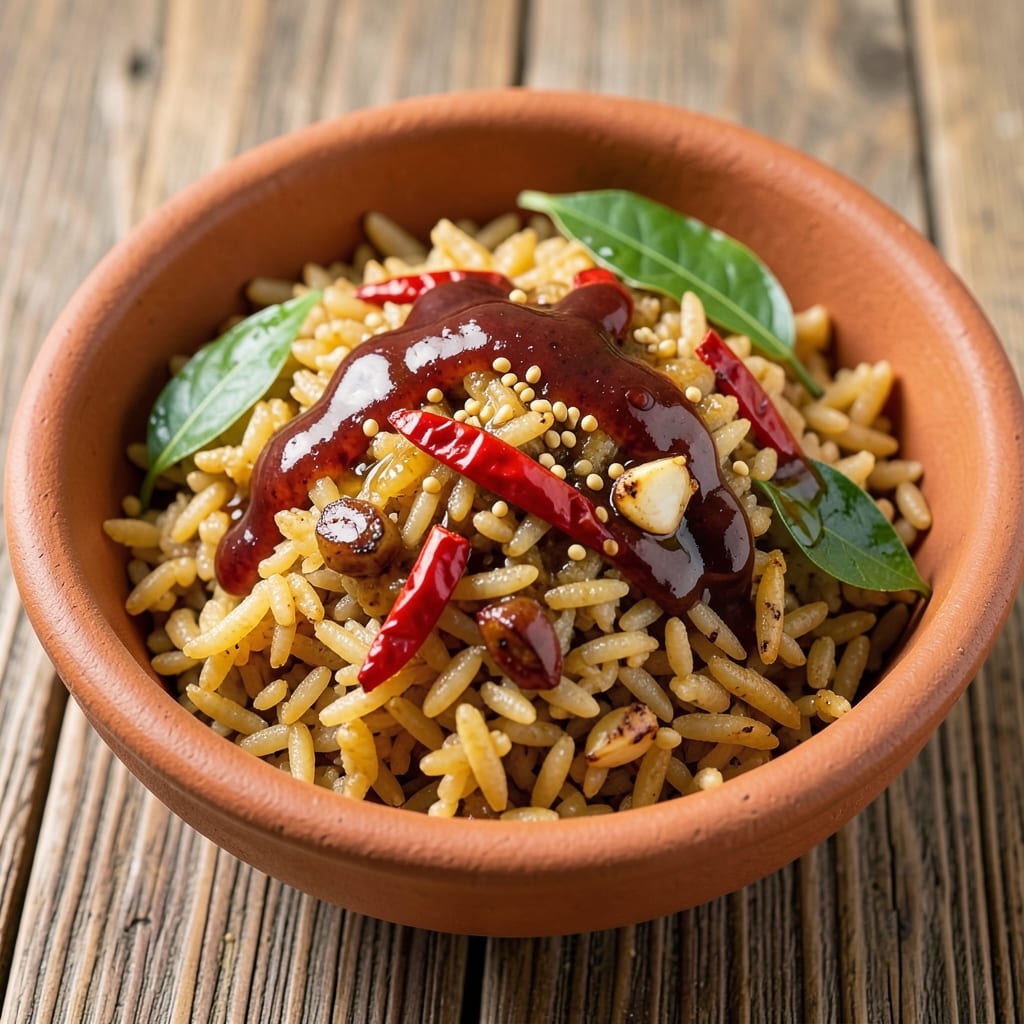
This Andhra tamarind rice recipe delivers bold, tangy flavors in a single pot—where fragrant raw rice meets spicy tamarind chutney and aromatic tempering. The key lies in balancing sour tamarind with fiery red chilies and earthy spices, creating a dish that’s both vibrant and deeply satisfying. I’ve perfected this technique over years of Andhra cooking, ensuring every bite delivers that signature tangy-spicy harmony.
The magic starts with raw rice (not polished), which absorbs the tamarind chutney and spice tempering beautifully. We’ll build the chutney from scratch—tamarind pulp, red chilies, and mustard seeds—then layer it with a fragrant tempering of curry leaves, garlic, and asafoetida. This one-pot method keeps flavors cohesive while minimizing cleanup, making it ideal for weeknight dinners or special occasions.
What you’ll end up with is golden, fragrant rice studded with tamarind’s bright acidity and a subtle heat from the chilies. The tempering adds depth, while the raw rice retains its nutty texture. Serve it with a side of sambar or raita for a complete Andhra meal—each bite is a balance of tang, spice, and comfort.
This recipe is foolproof for beginners but packed with traditional techniques that elevate it beyond basic tamarind rice. The secret? Patience in tempering and letting the flavors meld. Let’s get cooking!
Ingredients for andhra tamarind rice
Raw rice and tamarind form the heart of this vibrant Andhra dish—where tangy chutney meets fragrant tempering in one aromatic pot.
| Ingredient | Amount | Notes |
|---|---|---|
| Raw Rice 🍚 | 1 ½ cups | Unpolished basmati or sona masoori preferred |
| Tamarind Pulp 🍈 | ½ cup | High-quality, seedless preferred |
| Red Chilies 🌶️ | 4 whole | Dried, whole, not powdered |
| Mustard Seeds 🌿 | 1 tbsp | Whole, light brown preferred |
| Curry Leaves 🌿 | ¼ cup | Fresh, slightly wilted okay |
| Garlic Cloves 🧄 | 6 cloves | Fresh, peeled, roughly chopped |
| Asafoetida (Hing) 🌿 | ¼ tsp | Pure, high-quality powder |
| Cumin Seeds 🌿 | 1 tsp | Whole, toasted for aroma |
| Coriander Seeds 🌿 | ½ tsp | Whole, lightly toasted |
| Turmeric Powder 🧂 | ¼ tsp | Freshly ground preferred |
| Salt 🧂 | 1 ½ tsp | Diamond Crystal preferred |
| Ghee 🧈 | 2 tbsp | Pure, unsalted ghee |
| Coconut Oil 🫒 | 2 tbsp | Virgin, for tempering |
| Water 💧 | 3 cups | Filtered preferred |
The raw rice is non-negotiable—unpolished basmati or sona masoori from Indian grocery stores like Patel Brothers or Patel Brothers Online delivers the best texture and nutty flavor. For tamarind, high-quality pulp without seeds is essential—brands like Koyo or Sai are reliable. Red chilies should be whole and dried, not powdered, for that authentic Andhra heat. Mustard seeds and curry leaves are best sourced fresh from local Indian markets—they lose potency quickly once opened. Asafoetida, or hing, should be pure, high-quality powder—M.P. Birlas is a trusted brand for this aromatic spice.
No tamarind pulp? Lemon juice plus a pinch of sugar mimics the tang, though it won’t replicate the complexity. Substitute red chili powder at half the amount, but you’ll lose the smoky depth. For mustard seeds, white mustard seeds work in a pinch, but they lack the earthy richness. Curry leaves are tricky to replace—fresh bay leaves at double the amount come closest, though they’re not identical. Asafoetida is non-negotiable for authentic flavor, but if unavailable, extra garlic and onion powder can add depth. The ghee and coconut oil should be pure and unsalted—store-bought brands like Gowardhan or Parachute are dependable for this recipe.
Store raw rice in an airtight container in a cool, dark place for up to 6 months. Tamarind pulp keeps for 3 months in the pantry, while whole spices like mustard seeds and curry leaves stay potent for 6-12 months if stored properly. Ghee and coconut oil should be refrigerated after opening to preserve freshness. The tempering spices—asafoetida, cumin, and coriander—can be pre-toasted and stored in a sealed jar for 1 month. This dish reheats beautifully—simmer gently with a splash of water to restore moisture, and the flavors deepen overnight, making it even more aromatic.
Why You'll Love This Recipe
- No-Chop Needed: That tamarind pulp and mustard seeds? Just soak and temper—no dicing, no mincing, no stress. I swear, I’ve made this after a 10-hour shift with zero prep, and it still tastes like a Sunday lunch.
- Tamarind Tang Magic: The sour punch from that tamarind pulp cuts through the rice like a citrusy hug. Red chilies add heat, curry leaves bring earthiness—it’s the kind of balance that makes you go back for thirds without thinking.
- Lunchbox Legend: Pack this the next day, and it’s still vibrant and flavorful. My kids actually eat their rice now (shocking, I know), and it reheats like a dream—no soggy mess, just that perfect tangy bite.
- Pantry Staple Power: Five ingredients, zero specialty items. If you’ve got rice, tamarind, and a spice rack, you’re golden. Honestly, I make this when I’m too lazy to grocery shop—it’s my budget-friendly, no-fuss safety net.
Step-by-step instructions for Andhra tamarind rice
Master this iconic South Indian dish with precise technique and bold flavors.
Prepare the Tamarind Base
Begin by soaking the 0.5 cup tamarind pulp in 1 cup warm water for 10 minutes until it dissolves completely into a thick, tangy liquid. Strain through a fine-mesh sieve to remove any fibrous bits, pressing gently with a spoon to extract all the pulp. This concentrated tamarind mixture forms the aromatic foundation of the dish.
In a separate small bowl, lightly toast the 1 tsp cumin seeds and 0.5 tsp coriander seeds in a dry skillet over medium heat for 1-2 minutes until fragrant. Grind them coarsely with a mortar and pestle or spice grinder. This toasting enhances their natural oils and deepens the flavor profile. Set aside for the tempering stage.
Cook the Rice with Spices
Rinse the 1.5 cups raw rice thoroughly under cold water until the water runs clear. In a heavy-bottomed pot, combine the rice with 2 tbsp ghee, 0.25 tsp turmeric powder, and 1 tsp salt. Add 3 cups water and bring to a boil over high heat. Once boiling vigorously, reduce heat to low and simmer uncovered for 12-15 minutes until the rice is 70% cooked (it should still have a slight bite).
Real talk: The rice must be slightly undercooked at this stage to absorb the tamarind flavor perfectly. If you overcook it now, the final texture will be mushy. Test doneness by tasting a grain - it should be firm but translucent at the center.
Build the Flavorful Tempering
Heat 2 tbsp coconut oil in the same pot over medium heat until shimmering. Add the 4 whole red chilies and let them sizzle for 30 seconds until they darken slightly. Immediately add the 1 tbsp mustard seeds and 0.25 cup curry leaves, stirring constantly until the mustard seeds pop audibly.
Quickly add the 6 cloves garlic cloves and toast for 30 seconds until fragrant. Sprinkle in the 0.25 tsp asafoetida (hing) and the ground cumin-coriander mixture, stirring vigorously for 20 seconds until the spices release their aromatic oils. This rapid sequence creates the signature layered flavor of Andhra cuisine.
Finish with Tamarind and Rest
Pour the strained tamarind mixture into the pot and stir gently to combine with the rice. The acidity will cause slight effervescence - this is normal. Cover the pot and cook on low heat for an additional 5-7 minutes until the rice absorbs all the liquid and reaches perfect doneness. The final texture should be slightly sticky with distinct grains.
Remove from heat and let the rice rest covered for 5 minutes. This resting period allows the flavors to meld completely and the rice to achieve its ideal texture. Fluff gently with a fork before serving, ensuring each grain is coated with the tangy tamarind sauce. The dish should have vibrant red streaks from the chilies and a glossy finish from the coconut oil.
Pro Tips For Making Andhra Tamarind Rice
- Soak Rice 30 Minutes: I learned this the hard way—skipping the soak makes the rice turn mushy when you add the tangy tamarind later. Just 30 minutes in water (no salt) gives you fluffy grains that hold up to the sour punch. (Yes, even if you're impatient like me.) ---
- Temper Mustard Last: The mustard seeds burn faster than you think, especially when you're also frying curry leaves and red chilies. Add them to the hot oil right before the curry leaves—this keeps their nutty aroma intact and stops them from turning bitter. ---
- Dilute Tamarind Properly: Tamarind pulp is thick and stubborn. Mix it with twice the water (or more) before adding it to the rice, then strain out the seeds. Skimping here means a clumpy, unbalanced dish—no one wants to chew through pulp with their rice. ---
- Cook Rice Slightly Under: Andhra tamarind rice needs to absorb the tangy gravy later, so cook the rice just until the grains are 80% done—a tiny bite should still resist your teeth. Overcooking turns it into mush when the tamarind sauce hits. (Trust me, you’ll see the difference.)
Dietary considerations for andhra tamarind rice
Vegetarian-Friendly
This Andhra tamarind rice is naturally vegetarian and packed with plant-based protein from the raw rice, making it perfect for veggie diets. The dish relies entirely on tamarind, spices, and whole grains—no meat, dairy, or eggs are required. For extra protein, serve with sambar (made with lentils) or a side of toor dal. 💛
Gluten-Free Adaptation
The recipe is gluten-free by default since it uses rice and natural spices. However, always check your tamarind pulp and spice blends for hidden gluten—some brands add fillers. I recommend Koyo tamarind pulp and M.P. Birlas spices, both certified gluten-free. For extra flavor, toast brown rice instead of white to add nutty depth while keeping it safe for gluten-sensitive diets.
Spice Sensitivity Tips
If you're sensitive to heat, reduce the red chilies to 2 whole (or remove seeds) and add ½ tsp sugar to balance the tang. For a milder tempering, skip the asafoetida (though it’s key for authenticity) and use extra garlic for depth. The dish still delivers bold flavor without overwhelming spice—just adjust to your tolerance.
Nut-Free & Allergen-Free
This recipe contains no nuts, dairy, or common allergens, making it safe for most dietary restrictions. The only potential concerns are mustard seeds (check for cross-contamination if allergic) and tamarind (rarely causes issues, but always verify). For nut-free serving suggestions, pair with cucumber raita or boondi raita (made with chickpea flour).
Low-Oil Version
To reduce oil, use 1 tbsp ghee (instead of 2) and 1 tbsp coconut oil for tempering. Skip the extra ghee in the rice-cooking stage—just turmeric, salt, and water are enough. The tamarind’s acidity and spices will still shine, and the rice will absorb flavors beautifully. For extra moisture, add ¼ cup water during the final cooking step.
Meal Prep Storage
Store leftovers in an airtight container for up to 3 days in the fridge. Reheat gently with 2 tbsp water over low heat to restore moisture. The tamarind rice actually tastes better the next day as flavors meld! For freezing, portion into single-serving containers and freeze for up to 1 month. Thaw overnight in the fridge before reheating—this preserves texture perfectly. ✨
Nutrition facts
Frequently asked questions
Why does the recipe call for raw rice instead of polished rice?
Raw rice (unpolished) absorbs flavors better and maintains a nutty texture that polished rice loses. The bran layer in raw rice soaks up the tamarind chutney and spice tempering, creating that signature Andhra flavor profile. Plus, it's more nutritious with intact fiber and nutrients.
Can I make this dish without tamarind pulp?
Yes! Mix 1.5 tbsp lemon juice with ½ tsp sugar to mimic tamarind's tang. For deeper flavor, add ½ tsp vinegar to the tempering. The dish will still be delicious, though it won't have tamarind's unique complexity.
How do I adjust the spice level for sensitive eaters?
Reduce red chilies to 2 whole (remove seeds) and add ½ tsp sugar to balance the tang. For milder tempering, skip asafoetida and use extra garlic (8 cloves) instead. The dish remains flavorful while being gentler on sensitive palates.
What sides pair best with Andhra tamarind rice?
Classic pairings include sambar (lentil stew), toor dal, or cucumber raita. For protein, add boondi raita (chickpea flour dumplings) or a simple curd salad. The tangy rice balances well with mild, creamy sides.
Why should I rest the rice after cooking?
Resting for 5 minutes lets flavors meld and steam redistribute, preventing dryness. The rice absorbs remaining moisture, achieving perfect texture—slightly sticky but with distinct grains. Skipping this step often results in uneven doneness or a gummy texture.