
Main Courses
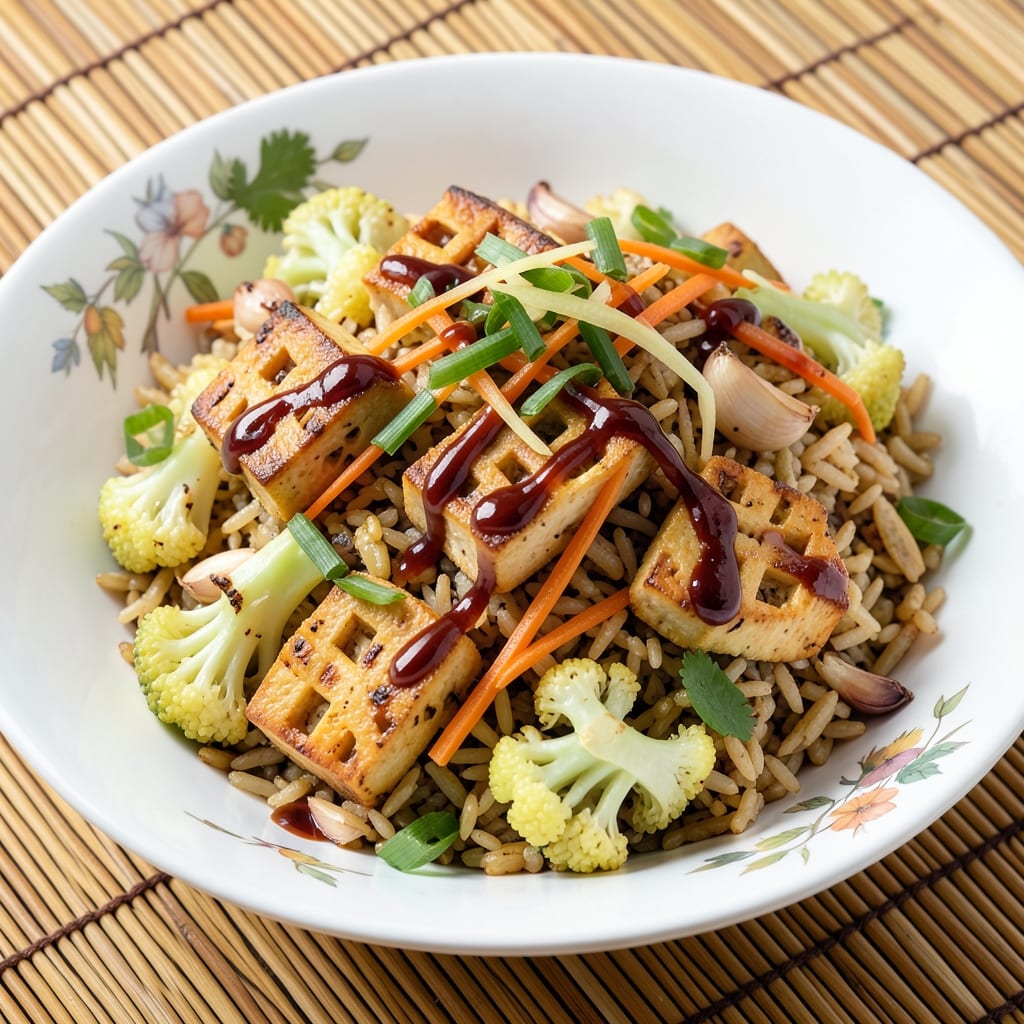
This vegan Asian cauliflower fried rice delivers all the wok-tossed crunch and savory depth of classic fried rice—without the rice. 🌱 The secret lies in perfectly prepped cauliflower florets that absorb flavors like a sponge while maintaining satisfying texture, paired with a quick-pickled carrot and scallion topping that adds vibrant contrast. I developed this recipe after realizing how often I craved fried rice but wanted a lower-carb option that still packed restaurant-quality flavor.
The foundation starts with high-heat stir-frying, where garlic, ginger, and sesame oil create an aromatic base before the cauliflower gets its turn. A splash of coconut aminos and rice vinegar keeps the sauce balanced—savory but never overpowering—while toasted sesame seeds add nutty depth. The optional tofu or mushrooms (or both) bring extra protein and texture, but this dish shines even without them.
What you'll end up with is a dish that's crispy on the edges, tender in the center, and bursting with umami from fermented black beans and a touch of chili oil. The pickled carrots and scallions cut through the richness, adding freshness with every bite. It's the kind of meal that feels indulgent but actually supports a balanced diet—perfect for weeknight dinners or meal prep.
Serve it with a drizzle of sriracha mayo or extra sesame seeds for garnish, alongside a simple cucumber salad or steamed greens. The leftovers taste even better the next day, making this a foolproof recipe for busy schedules. Let's get cooking!
Ingredients for asian cauliflower fried rice
Six cups of cauliflower florets and bold flavors make this vegan fried rice a crowd-pleaser.
| Ingredient | Amount | Notes |
|---|---|---|
| Extra-Firm Tofu 🍄 | 14 oz | Pressed and cubed |
| Fresh Cauliflower Florets 🥬 | 6 cups | Cut into bite-sized pieces |
| Garlic Cloves 🧄 | 4 cloves | Minced for aromatic base |
| Fresh Ginger 🌿 | 1 tbsp | Grated, not powdered |
| Medium Carrots 🥕 | 2 whole | Julienned for pickled topping |
| Scallions 🧅 | 4 whole | Thinly sliced, white/green parts |
| Sesame Oil 🫒 | 1 tbsp | Toasted for depth of flavor |
| Coconut Aminos 🥄 | 2 tbsp | Soy sauce alternative |
| Rice Vinegar 🍶 | 1 tbsp | For balanced acidity |
| Toasted Sesame Seeds 🌰 | 1 tbsp | For nutty garnish |
| Fermented Black Beans 🫘 | 2 tbsp | Chopped for umami punch |
| Chili Oil 🌶️ | 1 tbsp | Optional for heat |
| Vegetable Oil 🫒 | 2 tbsp | High smoke point preferred |
| Salt 🧂 | ½ tsp | Kosher or sea salt |
| Black Pepper 🌶️ | ¼ tsp | Freshly ground |
The cauliflower is non-negotiable here—fresh, firm florets from the produce section (not pre-shredded bags) give the best texture. Trader Joe's and Whole Foods have the best quality, but any organic store works. Press the tofu for at least 20 minutes before cubing—remove as much water as possible for crispy edges. The fermented black beans? Asian markets carry them in jars, or sub with a pinch of soy sauce if you're in a pinch. For the pickled carrots and scallions, julienne them thinly—they should look like matchsticks for that perfect texture contrast.
No sesame oil? Avocado oil at half the amount works in a bind, but you'll miss that nutty aroma. Swap coconut aminos for low-sodium soy sauce if needed, but reduce the rice vinegar to 1 tsp since soy is saltier. The chili oil is totally optional—sriracha or hot sauce in a pinch—but adds that signature wok-house kick. For the ginger, freshly grated is a must—powdered won't cut it. And if you're short on scallions, green onions work too, though they're a bit milder.
This keeps beautifully—3-4 days in the fridge with a tight lid, or 2 months frozen in portions. The cauliflower gets softer over time, so reheat with a splash of water or broth to restore crispness. I like to make double batches and freeze half—perfect for lazy weeknights. Store the pickled carrots separately if prepping ahead—they'll stay fresh for 5 days in the fridge. Garnish with extra sesame seeds before serving, and trust me, everyone will ask for seconds.
Why You'll Love This Recipe
- One-Pan Magic: I swear by this when I’m too tired to scrub a million bowls—just toss everything on one pan, stir, and walk away. The tofu and cauliflower crisp up perfectly while the carrots soften just enough, all without sticking like my last takeout attempt.
- Umami Bomb: That crispy, pan-fried tofu with fresh ginger and garlic? It’s the kind of flavor that makes you pause mid-bite. Honestly, the ginger’s zing cuts through the richness, and the cauliflower soaks up all the savory goodness like a sponge.
- Lunchbox Hero: Between us, this is my go-to for meal prep—packs well, stays fresh for days, and still tastes like a restaurant dish. I’ll often double the batch and freeze half; reheats like it was just made, no sad soggy rice here.
- Budget Win: Tofu and cauliflower stretch this dish for miles, and I’m always left with leftovers that somehow taste better the next day. Plus, using extra-firm tofu means no fancy cuts—just slice, press, and go. My wallet and my taste buds thank me.
Step-by-step instructions for wok-tossed Asian cauliflower fried rice
Here's how to turn simple ingredients into a restaurant-worthy vegan fried rice with perfect texture and bold flavors.
🔥 Step 1: Prep and Press the Tofu for Maximum Texture
Start by pressing the 14 oz extra-firm tofu to remove excess water. Wrap it tightly in a clean kitchen towel, place a heavy object on top (like a cast-iron skillet), and let it drain for 15-20 minutes. This step is crucial—it ensures your tofu absorbs flavors instead of steaming.
While the tofu presses, cut the 6 cups cauliflower florets into bite-sized pieces (about ½-inch cubes) and set aside. For the pickled topping, julienne the 2 whole medium carrots into thin matchsticks and slice the 4 whole scallions into ½-inch pieces, separating the white and green parts. The white will cook down while the green stays bright for garnish.
🍳 Step 2: Build the Flavor Base with Aromatics and Tofu
Heat a wok or large skillet over medium-high heat until hot, then add 2 tablespoons vegetable oil. Toss in the 4 minced garlic cloves and 1 tablespoon grated fresh ginger, stirring constantly for 30 seconds until fragrant—you should smell that fresh, pungent aroma that makes everything taste better.
Add the pressed tofu cubes and cook for 4-5 minutes, stirring occasionally, until they develop a light golden crust. Here's the thing—don't press down on the tofu or it'll release water and steam instead of browning. Flip the cubes with a spatula to ensure even cooking on all sides. Remove the tofu and set aside temporarily.
🥘 Step 3: Stir-Fry the Cauliflower and Season with Umami
In the same wok, add another 1 tablespoon vegetable oil if needed, then toss in the 6 cups cauliflower florets. Stir-fry for 5-6 minutes until the edges turn golden and the florets soften slightly but still maintain their shape—overcooking turns them mushy, and we're going for that perfect al dente crunch.
Add the 2 tablespoons coconut aminos, 1 tablespoon rice vinegar, 0.5 teaspoon salt, and 0.25 teaspoon black pepper. Stir well to coat the cauliflower evenly. Now's the time to add the 2 tablespoons chopped fermented black beans and 1 tablespoon toasted sesame seeds—these bring that deep, savory umami punch that makes this dish sing.
🍳 Step 4: Combine Everything and Finish with Sesame Oil
Return the tofu to the wok and toss everything together for 2 minutes until well combined and heated through. The cauliflower should be hot, the tofu should be warmed through, and the flavors should meld beautifully. If the mixture seems dry, add 1-2 tablespoons water to create a light, saucy consistency.
Drizzle in the 1 tablespoon sesame oil and the 1 tablespoon chili oil (if using), then toss one final time. The sesame oil adds that nutty aroma, while the chili oil brings a subtle heat that cuts through the richness. Taste and adjust seasoning—you might want to add a pinch more salt or a splash of rice vinegar for balance.
🍽️ Step 5: Assemble and Serve with Pickled Toppings
Transfer the fried rice to serving plates and immediately top with the julienned carrots and scallion whites. For the pickled topping, quickly mix the remaining scallion greens with 1 teaspoon rice vinegar and ½ teaspoon salt—this bright, tangy contrast elevates every bite.
Garnish with extra toasted sesame seeds and serve immediately while everything is hot and fragrant. The texture should be a perfect balance—crispy tofu, tender cauliflower, and that satisfying chew from the pickled carrots. This dish comes together faster than you'd think but delivers restaurant-quality results every time.
Pro Tips For Making Asian Cauliflower Fried Rice
- CRISP THE TOFU FIRST: I learned this the hard way—if you toss the tofu in after the veggies, it’ll steam instead of crisp. Press and cube it, then pan-fry in 1 tablespoon of oil until golden (about 5-6 minutes per side) before adding it back to the rice. The texture difference is night and day.
- CUT CAULIFLOWER SMALL: Yes, it looks like tiny rice, but aim for ½-inch florets—any bigger and they’ll stay crunchy while the rest of the dish softens. Pulse them in a food processor for even cooking, or hand-chop with a sharp knife. No one wants a mouthful of undercooked cauliflower.
- SAUTÉ GINGER AND GARLIC LOW: High heat burns ginger faster than you think, and it turns bitter. Cook these aromatics on medium-low until fragrant but not browned—just 2-3 minutes. The flavor will mellow and deepen the dish, not overpower it.
- ADD CARROTS LAST: I used to throw them in with the garlic, but they need time to soften properly. Dice them into thin matchsticks and stir-fry for 2 minutes after the cauliflower and tofu go in. They’ll caramelize just enough to add sweetness without turning mushy.
Troubleshooting this dish
Cauliflower Too Soft
If your cauliflower ends up mushy, it likely cooked too long or wasn't cut evenly. Start by cutting florets into ½-inch pieces—smaller than you might think for fried rice. Stir-fry over high heat for no more than 5-6 minutes total, and keep moving it constantly. The edges should be golden while the centers stay slightly firm. I've found that fresh cauliflower (not pre-shredded) holds up best—Trader Joe's or Whole Foods brands work perfectly. 🥬
Tofu Too Greasy
Excess oil in your tofu usually means it wasn't pressed properly. Wrap the 14 oz extra-firm tofu tightly in a towel and press for at least 20 minutes with a heavy object. After pressing, pat it dry with paper towels before cubing. When cooking, use medium-high heat and avoid pressing down on the tofu—this releases water instead of browning. If it still seems greasy, drain it on a wire rack for 5 minutes after cooking. 🍄
Flavor Too Mild
Weak flavors often come from skipping the umami boosters.
Pickled Topping Too Watery
Julienned carrots and scallions release water when mixed with vinegar. To fix this, pat them dry with paper towels before combining with 1 tsp rice vinegar and ½ tsp salt. Let them sit for 10 minutes before serving so excess moisture evaporates. For extra crunch, add 1 tsp cornstarch to the mix before tossing—it absorbs moisture without altering flavor. Serve immediately for the best texture contrast. 🥕
Sticking to the Wok
Sticking happens when food cooks in its own juices. Use high heat and enough oil (2 tbsp total) to prevent sticking. If the cauliflower or tofu clings, add 1 tbsp water and stir—this creates a light sauce that loosens everything. A well-seasoned carbon steel wok works best, but if yours isn't seasoned, use a nonstick skillet with a little extra oil. Avoid overcrowding the pan—cook in batches if needed. 🔥
Dry or Crumbly Texture
Dry fried rice usually means too much heat or not enough liquid. Keep your heat at medium-high and add 1-2 tbsp water if the mixture looks dry. For extra moisture, stir in 1 tbsp coconut aminos or rice vinegar at the end. If the texture is crumbly, it might be overcooked cauliflower—start with fresh florets and cook for no longer than 5 minutes. The tofu should be crispy, not dry. 💡
Nutrition facts
Frequently asked questions
Can I make this without tofu?
Swap the tofu for 1 cup chopped mushrooms (shiitake or cremini work best) or ½ cup chickpeas for extra protein. If you want to keep it completely rice-free, just increase the cauliflower to 8 cups and add ½ cup crumbled tempeh for texture. The key is maintaining that satisfying bite—mushrooms give a meaty chew while chickpeas add heartiness.
How do I make this spicier?
Start with the chili oil—use 2 tbsp instead of 1 tbsp for noticeable heat. For extra kick, add ½ tsp red pepper flakes when stir-frying the cauliflower, or finish with a drizzle of sriracha or gochujang. If you like it fiery, a dash of cayenne pepper in the seasoning mix works too. Remember, you can always adjust to taste at the end!
Can I use pre-riced cauliflower?
Pre-shredded cauliflower works in a pinch, but it releases more moisture and often turns mushy. For best results, stick with fresh florets cut into ½-inch pieces. If you must use pre-riced, squeeze out excess water with a clean towel before cooking, and reduce stir-fry time to 4 minutes max. The fresh version gives that perfect al dente texture we're aiming for!
What's the best way to store leftovers?
Store in an airtight container in the fridge for 3-4 days or freeze for 2 months. Reheat with 1 tbsp water or broth to restore moisture—microwave for 1-2 minutes or stir-fry in a pan for 3-4 minutes over medium heat. The pickled carrots and scallions should be stored separately and added fresh when reheating for that crisp texture.
Can I make this gluten-free?
Yes! Simply replace the coconut aminos with tamari (gluten-free soy sauce) or low-sodium coconut aminos. Check that your fermented black beans are gluten-free (some brands add wheat), and use certified gluten-free sesame oil if needed. All other ingredients are naturally gluten-free. The flavor stays rich and savory without any compromises!