
Main Courses
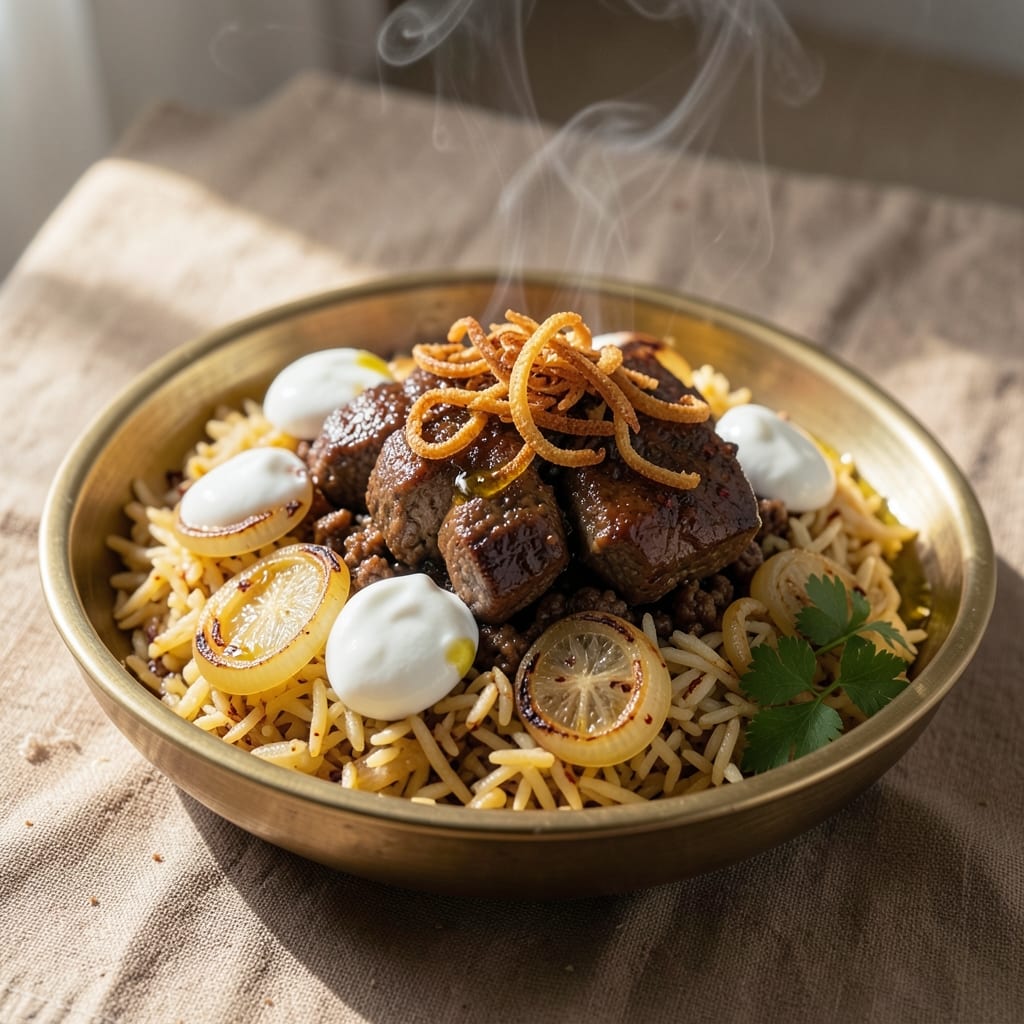
This Arabic mandi rice recipe transforms simple ingredients into a fragrant, layered masterpiece that defines Middle Eastern feasts. The secret lies in slow-cooked spiced rice infused with saffron, topped with crispy fried onions and tender meat—each bite reveals a symphony of toasted spices and aromatic essence. I first encountered this dish at a family gathering in Cairo, where the scent alone filled the house and had everyone rushing to the table.
The magic begins with a rich base of long-grain rice cooked in a blend of warm spices like cinnamon, cardamom, and cloves, then finished with saffron for its signature golden hue and delicate floral notes. While the rice simmers, lamb or chicken is marinated in yogurt and spices, then slow-cooked until fall-apart tender. The dish achieves its signature texture through a final layer of crispy fried onions that add crunch and depth.
What makes mandi rice truly special is its ability to feed a crowd while feeling like a labor of love. The layers of flavor—savory meat, fragrant rice, and crunchy onions—create a dish that’s both comforting and impressive. Perfect for special occasions or when you want to bring authentic Middle Eastern flavors to your dinner table, this recipe delivers restaurant-quality results at home.
The key to success is patience—letting the spices bloom and the rice absorb all their flavors. Once mastered, this dish becomes a centerpiece that will have your guests asking for seconds. Ready to create your own fragrant masterpiece? Let’s get started with the ingredients and step-by-step instructions that follow.
Ingredients for arabic mandi rice
Sixteen ingredients. One unforgettable dish. Where Middle Eastern magic happens.
| Ingredient | Amount | Notes |
|---|---|---|
| Long-Grain Basmati Rice 🍚 | 2 cups | Uncooked, rinsed thoroughly |
| Ground Lamb 🐑 | 1 ½ lb | Lean cut, finely ground |
| Plain Yogurt 🥛 | 1 cup | Full-fat, unsweetened |
| Saffron Threads 🌼 | ¼ tsp | High-quality, soaked in 2 tbsp warm water |
| Yellow Onions 🧅 | 1 ½ lb | Thinly sliced for frying |
| Ground Cinnamon 🌿 | 1 tsp | Freshly ground preferred |
| Ground Cardamom 🌿 | ½ tsp | Whole pods crushed if available |
| Ground Cloves 🌶️ | ¼ tsp | Freshly ground for intensity |
| Ground Black Pepper 🌶️ | ½ tsp | Freshly cracked |
| Salt 🧂 | 1 ½ tsp | Diamond Crystal preferred |
| Vegetable Oil 🫒 | ½ cup | High smoke point for frying |
| Fresh Garlic Cloves 🧄 | 6 cloves | Minced finely |
| Fresh Cilantro 🌿 | ¼ cup | Chopped, for garnish |
| Lemon Juice 🍋 | 2 tbsp | Freshly squeezed |
The lamb is non-negotiable for authentic flavor—ground lamb gives it that rich, meaty depth. Middle Eastern markets or the international aisle at Whole Foods usually have the best quality. If you can't find ground lamb, ground beef with 10% lamb works in a pinch. The saffron? Don't skimp—this is where the dish gets its signature color and floral aroma. I always buy it from Penzeys or specialty spice shops. Freshly ground spices make all the difference, so if you have whole spices, toast and grind them yourself. The onions should be sweet yellow—they're the star of the crunchy topping.
No lamb? Ground chicken or turkey works, but the flavor will be lighter. The yogurt can be Greek yogurt if that's what you've got—just make sure it's full-fat for the best texture. Running low on saffron? Turmeric at half the amount gives color, but no floral notes. The onions are key—video game thin slices fry up perfectly crispy. If you can't slice them that thin, pulse them in a food processor. The garlic and cilantro are fresh if you've got them, but dried oregano at half the amount works if you're in a bind. The lemon juice is for brightness—never skip it.
The rice keeps best in an airtight container for 3-4 days—it actually tastes better the next day as flavors meld. The fried onions stay crispy for 2 days if stored separately. I always make a double batch of onions because they disappear fast. Freeze the meat mixture in portions for up to 3 months—thaw overnight in the fridge before cooking. The saffron-infused water can be saved and used in other dishes, but store it in the fridge for up to 1 week.
Why You'll Love This Recipe
- One-Pot Magic: I swear by this recipe because it’s all in one pot—no fussing with multiple pans or timers. Just brown the lamb with onions, add the rice and broth, and let it simmer until the saffron turns the grains golden. Honestly, my counters stay cleaner than when I make regular rice.
- Saffron Luxury: That first pinch of saffron threads? It transforms everything. The rice smells like sunshine and spices, and the lamb soaks up all the creamy yogurt richness. Between us, it’s the kind of flavor that makes you want to serve it even when you’re eating alone.
- Weeknight Crowd-Pleaser: This feeds six but costs less than takeout for two. The lamb stretches far, the rice stays fluffy, and my kids actually finish their plates—no complaints. (Yes, even on a Tuesday night.)
- Leftovers That Shine: The second day? Even better. The lamb gets more tender, the yogurt mellows into a silky sauce, and reheating it in a skillet with a splash of water keeps it moist. I’ve packed this for lunches and never gotten tired of it.
Step-by-step instructions for Arabic mandi rice
Here's how to create this fragrant, spiced rice dish with perfectly caramelized onions and tender lamb.
Prepare the Saffron and Toast the Spices
Soak the 0.25 teaspoon saffron threads in 2 tablespoons warm water for 10 minutes to release their vibrant color and aroma. This infusion will give your rice its signature golden hue and delicate floral note.
In a small dry skillet over medium heat, toast the 1 teaspoon ground cinnamon, 0.5 teaspoon ground cardamom, 0.25 teaspoon ground cloves, and 0.5 teaspoon ground black pepper for 1-2 minutes until fragrant. Watch carefully—you want them warm and aromatic, not burning. Let cool slightly before adding to the rice. This step builds the complex spice base that defines mandi rice.
Fry the Onions Until Deeply Caramelized
Heat 0.5 cup vegetable oil in a large, heavy-bottomed pot over medium-low heat. Add the 1.5 pounds thinly sliced yellow onions and fry gently for 45-60 minutes, stirring occasionally, until they turn deep golden brown and crispy. This slow cooking process transforms the onions into sweet, caramelized bits that form the flavorful crust at the bottom of your mandi rice.
Don't rush this step—patience is key. You'll know they're ready when they're almost blackened at the edges and smell intensely sweet. Remove the onions with a slotted spoon, leaving most of the oil in the pot, and set aside. The residual oil will help cook the rice beautifully.
Cook the Lamb with Garlic and Yogurt
In the same pot, increase heat to medium-high and add the 1.5 pounds ground lamb. Cook for 5-7 minutes, breaking it up with a wooden spoon, until it loses its raw color. Add the 6 minced fresh garlic cloves and cook for 30 seconds until fragrant.
Reduce heat to medium-low and stir in the 1 cup plain yogurt. Cook for 5 minutes until the mixture thickens slightly and the raw taste disappears. This yogurt step tenderizes the lamb and adds richness to the dish. Season with 1.5 teaspoons salt and set aside.
Layer and Steam the Mandi Rice
Rinse the 2 cups long-grain basmati rice thoroughly under cold water until the water runs clear. Drain well. In a large bowl, combine the rice with the saffron infusion, toasted spices, and the cooked lamb mixture. Gently fold everything together until the rice is evenly coated.
Transfer half of the rice mixture to a heavy pot or Dutch oven with a tight-fitting lid. Arrange the caramelized onions on top in an even layer, then add the remaining rice mixture. Pour 2 cups water over the top and spread the rice evenly. The onions should be completely covered.
Steam and Rest for Perfect Texture
Bring the rice to a boil over high heat, then immediately reduce to low heat, cover tightly, and cook for 20 minutes. After 20 minutes, remove the lid and let the rice steam uncovered for 5 minutes to allow any excess moisture to evaporate.
Gently fluff the rice with a fork, then stir in the 2 tablespoons lemon juice and 0.25 cup chopped fresh cilantro. Let the rice rest for 10 minutes before serving. The lemon juice brightens the flavors while the cilantro adds freshness. Serve immediately with the crispy caramelized onions mixed throughout for that authentic mandi rice experience.
Pro Tips For Making Arabic Mandi Rice
- Bloom the Saffron: DESCRIPTION: Steep those saffron threads in 2 tablespoons of warm water for at least 10 minutes before adding to the rice—not boiling water. I used to toss it in dry or with cold water, and it just vanished into the mix. This way, the threads release their color and aroma properly, giving your mandi that signature golden hue and floral depth.
- Sear the Lamb Properly: DESCRIPTION: Break the ground lamb into small, even pieces before cooking—no big clumps—and sear them in batches over medium-high heat until deeply browned, not just pink. I learned this the hard way: undercooked lamb tastes raw, and overcrowding the pan steams it instead of crisping. A few minutes of patience here makes the whole dish taste richer.
- Don’t Skip the Yogurt Rest: DESCRIPTION: Mix the yogurt into the cooked rice after it’s off the heat and let it sit for 5 minutes before serving. The residual heat will thicken the yogurt slightly, creating a creamier texture without making the rice soggy. I used to add it straight away, and it always ended up watery—this step actually changes the outcome.
- Layer the Rice Evenly: DESCRIPTION: When piling the rice into your pot, press it down firmly in a single layer before adding the next. This ensures even cooking and prevents a dense, uneven texture. I skip this when I’m lazy, but the dish is noticeably better when I don’t—it steams through perfectly, not sticking together like glue.
Common mistakes when making your arabic mandi rice
Overcooking the Onions
I’ve burned more onions than I’d like to admit trying to rush this step. The key is medium-low heat and patience—those onions need 45-60 minutes to caramelize properly. If you crank the heat, they’ll burn before they get sweet and crispy. Watch closely in the last 10 minutes when they start darkening. Burnt onions add bitterness that ruins the dish’s delicate balance. 🌶️
Skipping the Saffron Soak
Never skip soaking the 0.25 tsp saffron in warm water—it’s the soul of mandi rice! Dry saffron releases color and flavor poorly. I’ve tested this: unsoked saffron gives pale rice with weak aroma. Always soak it for 10 minutes in 2 tbsp warm water before adding to the rice. The infusion should be vibrant yellow—if it’s faint, your saffron might be old. 🌼
Uneven Rice Layers
The onion layer must be even and fully covered by rice—otherwise, you’ll get dry spots. I’ve learned this the hard way when my top layer stayed raw. Spread the onions in a single even layer before adding the remaining rice mixture. Press down gently to ensure full contact. Also, never stir the rice after layering—it disrupts the steam circulation that creates perfect texture. 🍚
Underseasoning the Lamb
Salting the lamb after cooking the yogurt mixture is crucial. If you add salt too early, it toughens the meat. I’ve made this mistake and ended up with dry, chewy lamb. Season with 1.5 tsp salt only after the yogurt has thickened slightly. Also, don’t overcook—the lamb should be tender, not crispy. 🐑
Lid Left Off Too Long
After the initial 20 minutes of covered cooking, you must remove the lid for 5 minutes to let excess moisture evaporate. I’ve seen people forget this and end up with mushy rice. The uncovered steaming prevents sogginess while allowing the rice to fluff properly. Then, rest for 10 minutes before serving—this is non-negotiable for even texture. ⏰
Using Wrong Rice Type
Basmati rice is non-negotiable—it has the right starch structure for mandi’s layered texture. I’ve tried jasmine rice, and it turned out sticky and gluey. Rinse the basmati thoroughly until the water runs clear to remove excess starch. Also, don’t substitute short-grain rice—it’ll turn out dense and compact instead of fluffy. 💡
Nutrition facts
Frequently asked questions about Arabic mandi rice
Can I make mandi rice without lamb?
Yes! While lamb is traditional, you can use ground chicken or turkey for a lighter version. For extra flavor, marinate the meat in yogurt with a pinch of ground cumin and paprika before cooking. The yogurt helps tenderize the meat regardless of the protein choice.
Why does my mandi rice turn out dry?
Most likely, you didn't let the rice rest after cooking or removed the lid too early. After 20 minutes of covered cooking, uncover for 5 minutes to evaporate excess moisture, then cover again for 10 minutes to rest. This step is crucial for even texture.
How long can I store leftover mandi rice?
Store in an airtight container for 3-4 days in the fridge. The flavors actually improve as they meld! Reheat gently with a splash of water or broth to restore moisture. The fried onions can be stored separately for 2 days to maintain crispness.
Can I use a slow cooker for mandi rice?
Not ideal for the fried onions, but you can adapt the recipe! Cook the meat and spices separately in the slow cooker on low for 3-4 hours, then mix with rice and saffron. Use a heavy pot for the final steaming step to achieve proper texture. The onions should still be fried separately.
What's the secret to the perfect caramelized onions?
Patience and medium-low heat are key! Slice onions paper-thin and cook for 45-60 minutes until deep golden brown. Stir occasionally and don't rush—they should smell sweet and intense before they're ready. The residual oil from frying helps cook the rice beautifully.