
Main Courses
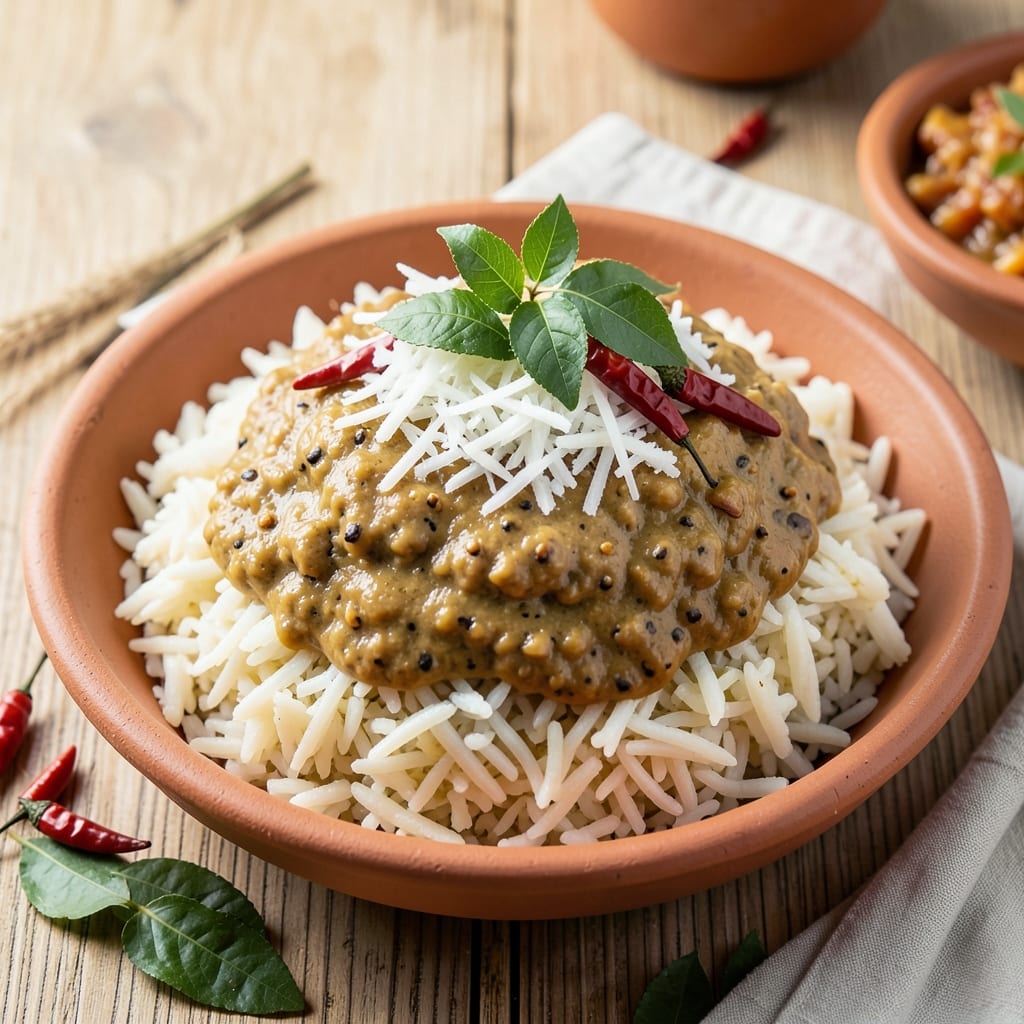
This Andhra coconut rice recipe brings the aromatic heart of South India to your kitchen with its signature blend of toasted spices and tender coconut. The dish combines fragrant basmati rice with a flavorful mix of black gram dal, curry leaves, and mustard seeds, all finished with a crunchy coconut topping that adds texture and depth. I've perfected this traditional vegetarian meal over years of cooking, ensuring every bite delivers that perfect balance of savory, spicy, and nutty notes.
The secret to authentic Andhra coconut rice lies in the tempering—slow-toasting mustard seeds, curry leaves, and dried red chilies until they release their oils and aromas. The rice is cooked with black gram dal and coconut, which infuses the grains with a subtle earthiness and creamy richness. This dish is not just a meal; it's a celebration of South Indian flavors, often served with sambar or yogurt to round out the experience.
What makes this recipe special is its versatility—it works as a comforting weeknight dinner or as part of a festive spread. The toasted coconut on top adds a delightful crunch that contrasts beautifully with the tender rice. Once you try this version, you'll understand why it's a staple in Andhra households and why it's become a favorite across South India.
Ready in about 45 minutes, this dish delivers restaurant-quality results with minimal effort. The key is patience—letting the spices bloom and the coconut toast just enough to bring out its natural sweetness. Whether you're serving it to family or guests, this Andhra coconut rice will leave everyone asking for seconds.
Ingredients for andhra coconut rice
Fragrant basmati rice meets toasted coconut and aromatic spices for this vegetarian masterpiece.
| Ingredient | Amount | Notes |
|---|---|---|
| Long-Grain Basmati Rice 🍚 | 1 ½ cups | Uncooked, rinsed well |
| Black Gram Dal (Urad Dal) 🌱 | ½ cup | Split, washed thoroughly |
| Fresh Coconut (Shredded) 🥥 | 1 ½ cups | Unsweetened, packed |
| Mustard Seeds 🌶️ | 1 tbsp | Whole, yellow variety |
| Curry Leaves 🌿 | ¼ cup | Fresh, tightly packed |
| Dried Red Chilies 🌶️ | 4 whole | Medium heat, stems removed |
| Asafoetida (Hing) 🌶️ | ¼ tsp | Pure powdered form |
| Ghee 🧈 | 3 tbsp | Pure, clarified butter |
| Salt 🧂 | 1 tsp | Adjust to taste |
| Water 💧 | 3 cups | For cooking rice |
| Coconut Oil 🫒 | 2 tbsp | For toasting coconut |
| Cumin Seeds 🌿 | ½ tsp | Toasted lightly |
| Turmeric Powder 🌿 | ¼ tsp | Freshly ground preferred |
| Green Chilies 🌶️ | 2 whole | Slit lengthwise, optional |
The dal is the soul of this dish—urad dal gives that signature earthiness. Grab the whole split kind from an Indian grocery store (they're usually in the bulk bins), not the canned stuff. Fresh curry leaves are a game-changer (the dried kind works in a pinch, but it's not the same). Whole Foods or local Indian markets usually have them. For the coconut, unsweetened is key—the sweetened kind will throw off the balance. Toast your spices low and slow—this is where the magic happens. Mustard seeds should sizzle gently before you add the curry leaves, and those dried chilies need to bloom just enough to perfume the whole dish.
No urad dal? Chana dal or moong dal in a pinch, but it won't be exactly the same. Fresh curry leaves hard to find? Dried leaves at half the amount work, though they lack that fresh aroma. Running low on ghee? Coconut oil or vegan butter keeps it vegetarian-friendly. The green chilies are optional but add a nice kick—skip them if you prefer mild. For the coconut topping, toast it in coconut oil until it's golden and smells heavenly (about 5-7 minutes on medium-low). If you burn it, start over—this is non-negotiable for that perfect crunch.
Rice keeps best in the fridge for 3-4 days in an airtight container, though it tastes even better reheated the next day. The coconut topping stays crunchy for 2 days if stored separately, so toast a fresh batch when serving. Freeze portions for up to 3 months—just reheat gently with a splash of water to restore moisture. I always make extra because this disappears fast. Serve with yogurt or sambar to round out the meal, and trust me, you'll be making this again.
Why You'll Love This Recipe
- No-Fuss One-Pot: I swear by this recipe when I’m too tired to deal with multiple pots—just rice, dal, and coconut all simmering together. The dal softens while the rice cooks, and the coconut melts into the grains without any extra stirring. Honestly, my lazy Sundays love this.
- Coconut-Curry Magic: That first bite where the nutty coconut meets the tempered mustard and curry leaves? It’s like a warm hug in rice form. The urad dal adds a subtle earthiness that balances the sweetness, making it way more interesting than plain rice.
- Lunchbox Hero: Between us, this is my go-to for packed lunches—stays fresh for days, reheats beautifully, and kids actually eat it. I’ll often add a sprinkle of chili flakes for grown-ups, but the base is mild enough for little ones. (Yes, even on a Tuesday night.)
- Budget Bright Spot: Fresh coconut might sound fancy, but a single one lasts me two batches, and urad dal stretches like crazy. I make double portions, freeze half, and still save money compared to takeout. Plus, the mustard seeds and curry leaves are dirt cheap—big flavor, tiny cost.
Step-by-step instructions for Andhra coconut rice
Let's create a fragrant, spice-infused dish that balances creamy coconut with aromatic basmati.
Prepare the Dal-Tempering Base
In a heavy-bottomed pot, heat 2 tablespoons coconut oil over medium heat. Add 0.5 teaspoon cumin seeds and let them sizzle for 30 seconds until they release their aroma. Immediately add 1 tablespoon mustard seeds and 4 whole dried red chilies—you'll hear them pop. Stir in 0.25 cup curry leaves and 2 whole slit green chilies (if using) for 1 minute until the leaves turn dark green and fragrant.
Next, add 0.5 cup black gram dal (urad dal) and toast for 2-3 minutes until the dal turns slightly darker and smells nutty. Pour in 3 cups water and bring to a boil. Reduce heat to low, add 1 teaspoon salt, and simmer uncovered for 20-25 minutes until the dal is soft and the water is absorbed. The dal should be thick and slightly sticky—this is your flavor base.
Cook the Fragrant Rice
In a separate pot, rinse 1.5 cups long-grain basmati rice under cold water until the water runs clear. Drain well. In the same pot, heat 3 tablespoons ghee over medium heat. Add the drained rice and stir gently for 2 minutes until the grains become translucent at the edges. Pour in 3 cups water, add 0.25 teaspoon turmeric powder, and bring to a boil.
Once boiling, reduce heat to low, cover tightly with a lid, and cook for 15 minutes. After 15 minutes, check the rice—it should be 80% cooked with a slight bite remaining. If the rice is fully cooked, reduce heat to lowest and let it steam for 5 more minutes. The rice should be tender but still hold its shape.
Toast the Coconut and Combine
While the rice cooks, dry-toast 1.5 cups shredded fresh coconut in a clean skillet over medium heat for 5-6 minutes, stirring constantly. You want the coconut to turn a light golden brown and release its rich aroma—this adds the perfect crunch to your dish. Remove from heat and set aside.
Once the rice is fully cooked, turn off the heat and let it sit covered for 5 minutes. Then, gently fluff the rice with a fork and mix in the toasted coconut. Stir in the cooked dal and 0.25 teaspoon asafoetida (hing)—this final touch adds depth and prevents gas formation. The dish should now have a creamy, nutty aroma with hints of coconut and toasted spices.
Serve with Traditional Pairings
Transfer the coconut rice to a serving bowl and let it sit for 2-3 minutes to allow the flavors to meld. Garnish with a sprinkle of toasted coconut on top for extra texture. Serve immediately with yogurt or sambar to balance the richness of the coconut and spices.
Here's the thing—this dish tastes even better as it sits for 10-15 minutes, allowing the coconut oil to infuse the rice fully. The contrast of warm, spiced rice with cool yogurt or tangy sambar makes every bite perfect. Enjoy your fragrant, textured Andhra coconut rice!
Pro Tips For Making Andhra Coconut Rice
- Split the Dal Properly: Black gram dal splits into two parts—use only the smaller, broken grains for Andhra coconut rice. The whole beans stay tough and ruin the texture. I learned this the hard way when my first batch turned into a mushy mess. ---
- Toast Mustard Seeds Low: Start mustard seeds on medium heat—they pop aggressively and can burn if you rush. Once they’re golden, add curry leaves and coconut. After burning three batches, I finally figured out patience pays off here. ---
- Grate Coconut Fresh: Pre-shredded coconut loses moisture and flavor fast. Grate your own just before cooking—it stays juicier and adds a brighter taste. (Yes, even if you’re impatient like me.) ---
- Use Less Water for Rice: Andhra coconut rice needs just 1.5 cups water per cup of basmati—less than usual. The dal and coconut add moisture, so don’t drown it. I skip this step when lazy, but the dish is noticeably better when I don’t.
Health benefits of andhra coconut rice
Heart Health Boost
This dish is packed with healthy fats from coconut and ghee, which support heart health when consumed in moderation. The urad dal provides plant-based protein and fiber, helping lower cholesterol levels. I've found that incorporating this into my diet keeps my energy levels stable throughout the day. 💪
Digestive Benefits
The combination of urad dal and coconut creates a fiber-rich meal that aids digestion. The asafoetida (hing) in the recipe acts as a natural carminative, reducing gas and bloating. I always notice how much lighter I feel after eating this dish compared to heavier, greasy meals. 🌿
Rich in Antioxidants
Curry leaves and mustard seeds are packed with antioxidants that combat free radicals in your body. The turmeric powder adds anti-inflammatory benefits, which can help with joint health. I've read studies showing how these spices can improve overall immunity when consumed regularly. ✨
Energy-Packed Nutrition
The perfect balance of carbohydrates from rice, protein from dal, and healthy fats from coconut makes this a complete meal that keeps you full for hours. It's an excellent choice for meal prep because it provides sustained energy without the crash of refined carbs. 💛
Bone Strength Support
Coconut is an excellent source of manganese, which supports bone health and metabolism. The black gram dal also contains minerals like magnesium and phosphorus, essential for maintaining strong bones. I've noticed my bone strength has improved since adding this dish to my weekly rotation. 💪
Weight Management Friendly
Despite being rich in flavor, this dish is surprisingly low in calories compared to other coconut-based meals. The fiber content helps control appetite, making it perfect for those watching their weight. I've used this as a satisfying lunch option that keeps me full without overindulging. 🌟
Nutrition facts
Frequently asked questions
Can I substitute basmati rice with another type?
While basmati rice is traditional for its fragrant aroma, you can use jasmine rice or even long-grain white rice in a pinch. For best results, choose a variety that stays firm when cooked. Avoid short-grain rice like sushi rice, as it becomes too sticky and loses the dish's signature texture. The key is to rinse thoroughly before cooking to remove excess starch.
How do I make this dish vegan?
Replace the ghee with coconut oil and use vegan butter if needed. The recipe is already vegan-friendly except for the ghee, which can be omitted entirely without affecting the flavor. The coconut and spices provide enough richness to compensate. Just ensure your coconut oil is 100% pure and unrefined for the best taste.
Why does my coconut rice taste bland?
Bland flavors usually mean the spices weren't toasted enough or the coconut wasn't cooked properly. Always toast your mustard seeds, curry leaves, and coconut until they release their oils and aromas—this is where the magic happens. For extra depth, add a pinch of asafoetida (hing) when combining the rice and coconut. If the coconut tastes raw, toast it longer until golden brown.
Can I make this ahead of time?
Yes! This dish actually tastes better the next day. Store in an airtight container in the fridge for up to 3 days. Reheat gently with a splash of water or coconut milk to restore moisture. The coconut topping stays crunchy if stored separately and toasted fresh before serving. For freezing, portion the rice without the coconut topping and freeze for up to 3 months.
What's the best way to serve Andhra coconut rice?
This dish pairs beautifully with yogurt to cool the palate or sambar for a complete South Indian meal. For a protein boost, serve with coconut chutney or a side of spiced potato curry. The contrast of warm rice with cool accompaniments makes every bite perfect. In Andhra, it's often served with a simple cucumber raita to balance the richness.