
Salads
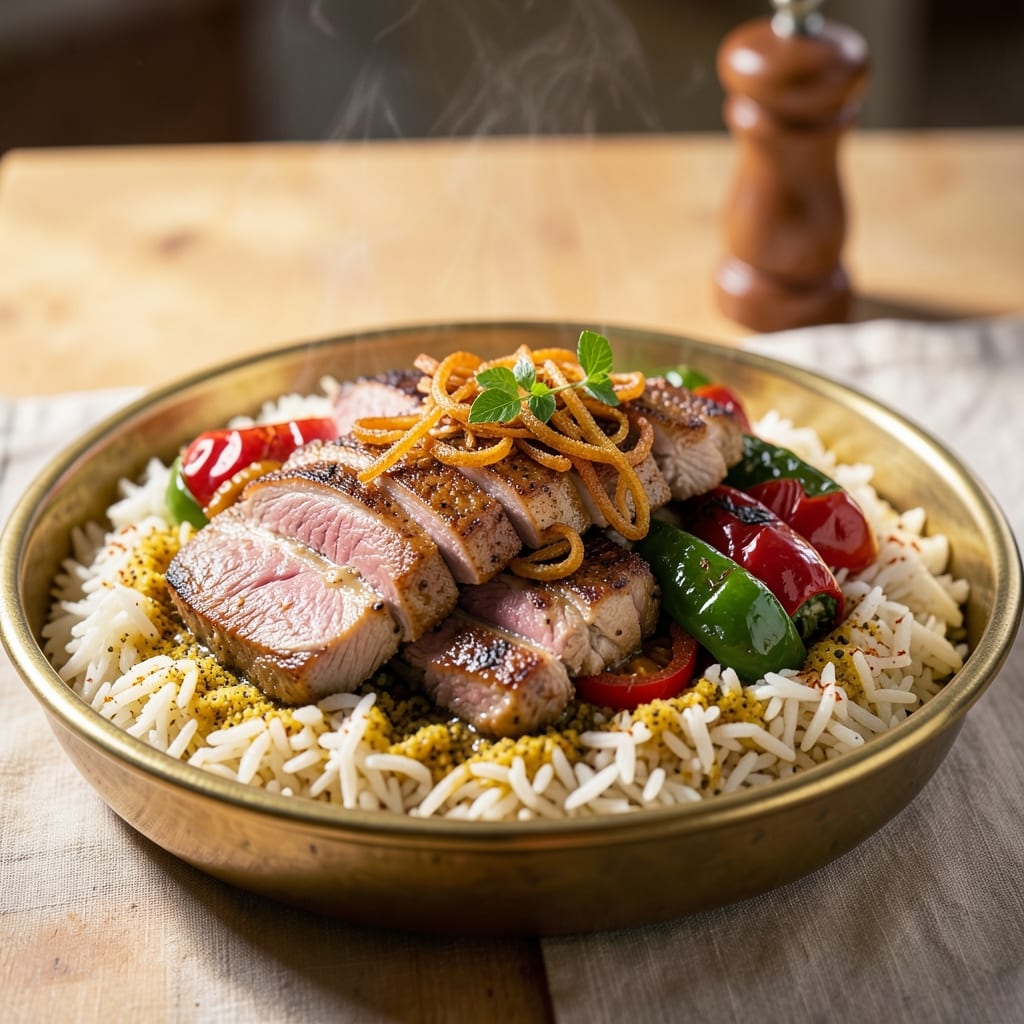
This Al Kabsa rice recipe brings the rich, aromatic traditions of Saudi Arabia to your kitchen table. 🌟 The dish features tender lamb slow-cooked with warm spices, fragrant saffron-infused rice, and tender vegetables, all simmered together into one deeply flavorful pilaf. What makes it special is the balance of sweet, smoky, and earthy flavors that come from slow cooking and traditional spice blends.
The foundation of Al Kabsa lies in its spiced rice base, where saffron and cardamom create that signature golden hue and delicate aroma. The lamb is marinated in a blend of garlic, cumin, and coriander before slow-cooking with potatoes and carrots, ensuring every bite is infused with rich, savory depth. This dish is more than just a meal—it’s a celebration of Saudi hospitality and tradition.
By the time you serve this dish, your kitchen will be filled with the intoxicating scent of spices and saffron, and your guests will be treated to a fragrant, hearty meal that’s perfect for gatherings or special occasions. The tender lamb falls apart easily, while the rice absorbs all the flavors, creating a harmonious blend that’s both comforting and impressive.
Serve this Al Kabsa with fresh mint yogurt on the side and warm flatbread to soak up every last bit of the flavorful sauce. The combination of textures and flavors makes it a dish worth savoring—and one that will leave everyone asking for seconds. Let’s get started on creating this timeless classic.
Ingredients for al kabsa rice
Six aromatic spices and tender lamb create this Saudi Arabian classic—fragrant, hearty, and full of tradition.
| Ingredient | Amount | Notes |
|---|---|---|
| Boneless Lamb Leg 🥩 | 2 ½ lb | Cut into 1.5-inch cubes |
| Long-Grain White Rice 🍚 | 2 cups | Basmati or jasmine preferred |
| Saffron Threads 🌼 | ¼ tsp | Crushed for maximum color |
| Ground Cumin 🌿 | 1 tbsp | Toasted for deeper flavor |
| Ground Coriander 🌿 | 1 tbsp | Freshly ground preferred |
| Ground Cardamom 🌿 | 1 tsp | Freshly ground for best aroma |
| Garlic Cloves 🧄 | 6 cloves | Minced for marinade |
| Onions 🧅 | 1 whole | Large, thinly sliced |
| Russet Potatoes 🥔 | 2 lb | Peeled, cut into chunks |
| Carrots 🥕 | 1 ½ lb | Peeled, cut into chunks |
| Fresh Ginger 🌿 | 1 inch | Peeled, grated |
| Vegetable Oil 🫒 | ½ cup | For frying onions |
| Chicken Broth 💧 | 4 cups | Low-sodium preferred |
| Salt 🧂 | 1 ½ tsp | Kosher or sea salt |
| Black Pepper 🌶️ | ½ tsp | Freshly ground |
The lamb is the star here, so look for well-marbled cuts—the leg or shoulder work best. If you can't find fresh saffron threads, saffron powder at half the amount works, but the color won't be as vibrant. Middle Eastern markets usually have the best quality spices, but the grocery store's bulk bins are fine too. The cardamom needs to be freshly ground—if you've got whole pods, crush them with a mortar and pestle. For the rice, basmati or jasmine is ideal, but any long-grain white will do. Just make sure it's not pre-cooked or instant.
No lamb? Beef chuck works in a pinch—it's cheaper and still tender when slow-cooked. Running short on saffron? Turmeric at one-fourth the amount gives a similar golden hue, though the flavor won't be the same. The ginger should be fresh—dried loses its punch. If you can't find fresh, ground ginger at half the amount is okay, but toast it first in a dry pan for 30 seconds to wake up the flavor. The onions are the base of the whole dish, so don't skip caramelizing them—they should be golden brown before adding the lamb. The potatoes and carrots can be any variety, but Russets hold up best when slow-cooked.
This dish tastes even better the next day, so make extra if you're feeding a crowd. Store leftovers in an airtight container in the fridge for up to 5 days, or freeze for 3 months. The rice will dry out fast, so reheat with a splash of water or broth. For serving, keep the mint yogurt and flatbread on the side—warm bread soaks up all the flavor. If you're making this ahead, assemble everything except the rice, then cook the rice fresh before serving to keep it light and fluffy.
Why You'll Love This Recipe
- One-Pot Magic: I swear by this recipe when I’m too tired to scrub a million dishes—just brown the lamb, toast the spices, dump in the rice, and let it simmer. No fancy layers, no stress.
- Golden Spice Bomb: That first whiff of toasted cumin and coriander hitting the lamb? Instant mood booster. The saffron turns the rice into liquid sunshine, and the lamb stays tender with just enough bite.
- Weeknight to Weekend: Make a big batch on Sunday—it reheats like a dream for lunches, and the flavors only get richer. Serve it with flatbread for a casual dinner or pile it high for a celebratory spread.
- Budget-Friendly Feast: Lamb leg stretches farther than you’d think, and rice is cheap. One pot means minimal waste, and leftovers? Even better the next day. My wallet and my family thank me every time.
Step-by-step instructions for Al Kabsa rice
Here's how to create this fragrant, spiced lamb pilaf with perfect rice every time.
🍳 Step 1: Sear the Lamb and Prepare the Spice Base
Heat the 0.5 cup vegetable oil in a large, heavy pot over medium-high heat. Add the 2.5 lb boneless lamb leg cut into 1.5-inch cubes and sear until golden brown on all sides, about 5-6 minutes. This step builds deep flavor through the Maillard reaction.
Once the lamb is browned, remove it from the pot and set aside. In the same pot, add the 1 whole onions sliced thinly and cook for 3-4 minutes until softened. Stir in the 6 cloves minced garlic, 1 inch grated fresh ginger, 1 tbsp ground cumin, 1 tbsp ground coriander, and 1 tsp ground cardamom. Cook for 1 minute until fragrant—this releases the spices' aromatic oils.
🥘 Step 2: Layer the Vegetables and Rice
Return the seared lamb to the pot. Add the 2 lb peeled russet potatoes cut into chunks and 1.5 lb peeled carrots cut into chunks. Pour in the 4 cups chicken broth and bring to a gentle boil. Reduce heat to low and let it simmer for 15 minutes to begin tenderizing the vegetables.
After 15 minutes, stir in the 2 cups long-grain white rice and the 0.25 tsp crushed saffron threads. The saffron should infuse the broth with its signature golden color. Gently fold everything together—this ensures the rice absorbs the flavorful broth evenly. The rice should be fully submerged, so add a splash of water if needed.
🔥 Step 3: Simmer to Perfect Texture
Cover the pot tightly with a lid and reduce heat to low. Let it simmer for 20-25 minutes without disturbing it. This slow cooking allows the rice to absorb the broth gradually, resulting in fluffy, separate grains. The lamb should be tender and the vegetables fork-tender by this point.
Here's the thing—don't peek! Every time you lift the lid, you release steam, which can make the rice dry out. Instead, listen for the gentle bubbling of the broth. When the rice is tender and the liquid has mostly absorbed, it's ready. If the rice isn't quite done, add 2-3 tablespoons of water and cover for another 5 minutes.
⏰ Step 4: Rest and Season
Once the rice is tender and the liquid is absorbed, remove the pot from heat. Let it rest covered for 10 minutes. This resting period allows the rice to finish steaming and the flavors to meld together. It also prevents the rice from becoming mushy when you serve it.
After resting, fluff the rice gently with a fork, then taste and adjust seasoning with the 1.5 tsp salt and 0.5 tsp black pepper if needed. The saffron and spices should already give it a rich, aromatic flavor, but a final adjustment ensures perfect balance. Serve immediately with warm flatbread or naan for the full al kabsa experience.
Pro Tips For Making Al Kabsa Rice
- Sear the Lamb First: Don’t just toss the lamb into the pot—get that meat browned first. After cutting the lamb into chunks, sear them in batches in a hot pot with a little oil until deep golden. This locks in flavor and prevents the broth from turning bland later.
- Bloom the Spices Dry: Toast your ground cumin and coriander in the same pot before adding oil—just 30 seconds over medium heat until fragrant. I used to skip this, and the spices never hit the same way. (Yes, even if you’re impatient like me.)
- Rinse the Rice Twice: Long-grain rice for al kabsa needs a quick rinse—two cold-water washes, then a quick drain. This removes excess starch so the grains stay separate and fluffy, not gummy. Trust me, your future self will notice the difference.
- Layer Saffron with Heat: Crush the saffron threads after removing them from the water, then bloom them in warm broth for 5 minutes before adding to the pot. Cold water makes them bitter, and skipping the bloom means wasted flavor. (Your guests will ask how you got such vibrant rice.)
Serving suggestions for al kabsa rice
Traditional Garnishes
Freshly chopped mint leaves and toasted pumpkin seeds are classic garnishes that add vibrant color and texture. Sprinkle them over the finished dish just before serving to keep the presentation fresh and inviting. I like to add a few extra mint leaves for their bright, herbal contrast against the rich lamb and rice. 🌿
Side Dishes
Serve Al Kabsa with warm naan or pita bread to soak up the flavorful sauce. A simple cucumber and tomato salad with lemon dressing cuts through the richness beautifully. For extra protein, add a side of grilled chicken skewers or hummus with warm pita chips.
Yogurt Sauce
Prepare a cooling mint yogurt sauce by mixing 1 cup plain yogurt with 2 tablespoons chopped mint, 1 tablespoon lemon juice, and a pinch of salt. This creamy sauce balances the spiced flavors perfectly. I often drizzle it over the top of the dish just before serving for that restaurant-quality touch. 💛
Drink Pairings
Pair your Al Kabsa with Saudi Arabian coffee (gahwa) for an authentic experience. For a refreshing option, try sparkling mint lemonade or a light white wine like Sauvignon Blanc. The crisp acidity of the wine cleanses the palate between bites of rich, spiced rice. 🍷
Presentation Tips
Serve Al Kabsa in a large, shallow dish to showcase its vibrant colors and textures. Arrange the lamb and vegetables artistically on top of the rice for an inviting presentation. Garnish with extra toasted pumpkin seeds and a sprinkle of paprika for a pop of color. Warm the serving dish slightly before transferring the food to keep everything hot and ready to eat. ✨
Nutrition facts
Frequently asked questions
Can I substitute lamb with another meat in this recipe?
Yes! While lamb is traditional, you can use beef chuck or even chicken thighs for a milder flavor. For beef, increase cooking time by 10-15 minutes to ensure tenderness. Chicken works well but may require slightly less cooking time (15-20 minutes instead of 20-25 minutes). Adjust seasoning to taste after cooking.
Why does my Al Kabsa rice turn out mushy?
Mushy rice usually happens when you stir too much or don't let it rest. Avoid lifting the lid during cooking—steam is crucial for fluffy texture. After cooking, let it rest 10 minutes covered before fluffing. If it's still too soft, your pot may need more heat or a longer cooking time. Try using a heavy-bottomed pot next time.
How can I make this dish ahead of time?
Al Kabsa tastes even better the next day! Cook everything except the rice, then refrigerate in an airtight container for up to 3 days. When ready to serve, add the rice and cook it fresh (about 15 minutes
What's the secret to getting that authentic golden color?
The golden hue comes from saffron and proper caramelization. Use high-quality saffron threads (not powder) and crush them well. Also, caramelize the onions until deep golden brown before adding other ingredients. For extra richness, add a pinch of turmeric (though it won't taste the same as saffron).
Can I make this recipe without saffron?
Yes, but the dish will lose its signature color and aroma. Use ½ teaspoon turmeric for color and add 1 extra pinch of cardamom for depth. The flavor won't be identical, but it will still be delicious. For best results, try to find saffron—it's worth the investment for authentic al kabsa!