
Main Courses
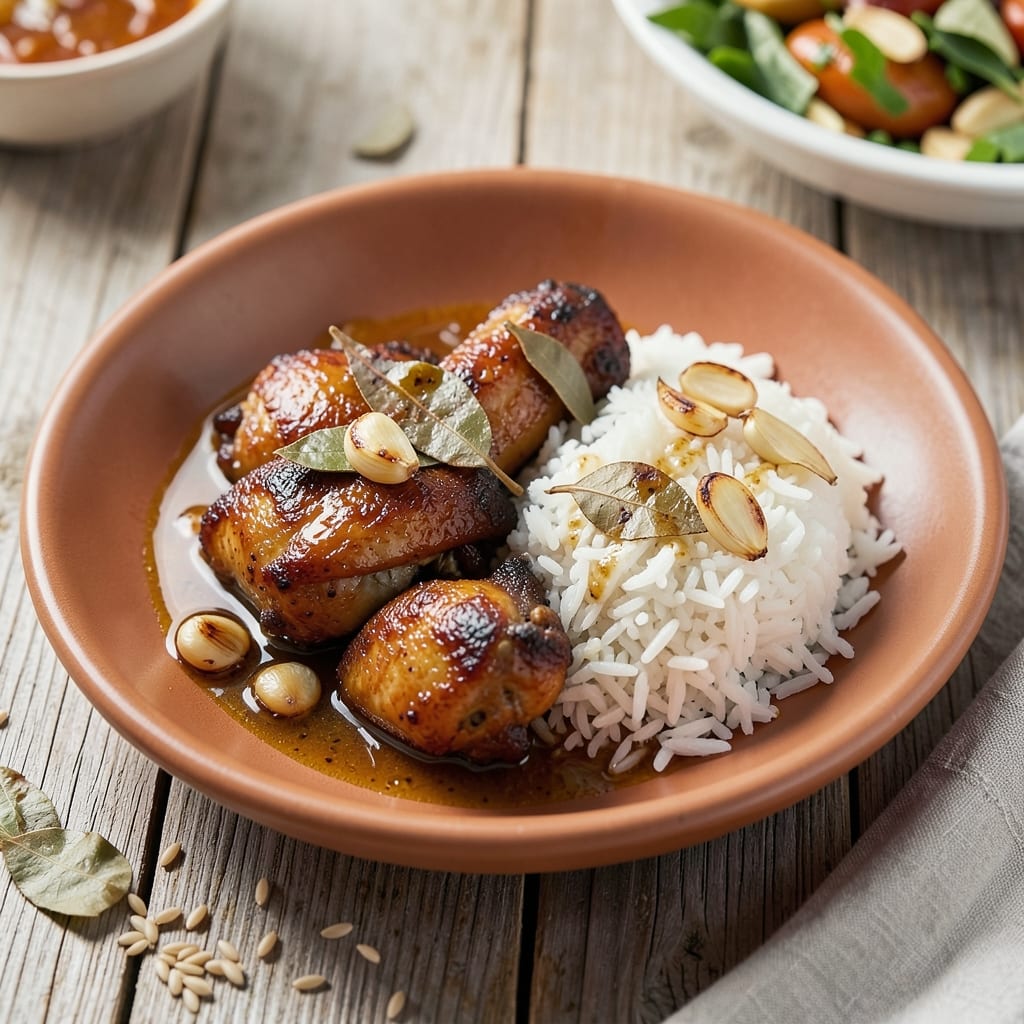
This Filipino adobo rice recipe delivers the tangy, savory essence of home—where chicken simmers in a vinegar-soy sauce until tender, then pairs with perfectly steamed rice that soaks up every drop of flavor. 🌟 The secret lies in balancing sour, salty, and umami notes through slow braising, transforming simple ingredients into a dish that tastes like a family reunion in every bite.
What sets this recipe apart is its authenticity—no shortcuts, just the traditional method of marinating chicken in soy sauce and vinegar, then braising until the meat falls apart. The rice, cooked in the same adobo-infused liquid, becomes fragrant and slightly sticky, with each grain absorbing the rich, caramelized sauce. This is comfort food at its finest, where every spoonful tells a story.
The result is a harmonious blend of textures: tender, slightly crispy chicken pieces resting on a bed of fragrant rice, all bathed in a glossy, tangy sauce. The aroma alone will have your kitchen filled with the warmth of Filipino home cooking, while the flavors deliver that perfect balance of sour, salty, and savory that defines adobo. It’s the kind of dish that feels like a hug on a plate.
Perfect for weeknight dinners or special gatherings, this recipe serves as both a meal and a cultural experience. The leftovers reheat beautifully, making it ideal for meal prep or feeding a crowd. Let’s bring the flavors of the Philippines to your table—one savory, vinegar-kissed bite at a time.
Ingredients for adobo rice filipino
Authentic Filipino flavors start with these 12 simple yet transformative ingredients.
| Ingredient | Amount | Notes |
|---|---|---|
| Boneless Chicken Thighs 🍗 | 1 ½ lb | Cut into 2-inch pieces |
| White Vinegar 💧 | ½ cup | Distilled preferred |
| Soy Sauce 🍶 | ½ cup | Light or regular |
| Garlic Cloves 🧄 | 6 cloves | Minced, fresh preferred |
| Long-Grain White Rice 🍚 | 2 cups | Uncooked, jasmine or basmati |
| Bay Leaves 🌿 | 2 whole | Dried, crushed slightly |
| Black Peppercorns 🌶️ | 1 tsp | Crushed, not ground |
| Sugar 🍚 | 1 tbsp | White granulated |
| Olive Oil 🫒 | 2 tbsp | Extra-virgin for richness |
| Salt 🧂 | 1 ½ tsp | Kosher or sea salt |
| Water 💧 | 3 cups | Filtered preferred |
| Green Onions 🧅 | 3 whole | Sliced, for garnish |
The chicken thighs are non-negotiable here—bone-in, skin-on for maximum flavor, though boneless works in a pinch. Filipino markets or well-stocked Asian grocery stores carry the best quality, but any supermarket will do. Look for thighs with good marbling to ensure juiciness. The vinegar should be distilled white—apple cider vinegar works but lacks that classic adobo tang. Soy sauce matters too: use light soy for authenticity, though regular soy adds depth. For garlic, fresh is essential—pre-minced loses its punch quickly.
No vinegar? Lemon juice at double the amount works in a pinch, though the flavor won’t be identical. Swap soy sauce for coconut aminos if needed, but reduce to half the quantity—it’s saltier. Pre-minced garlic is fine, but fresh minced gives that aromatic boost. The rice? Jasmine or basmati soaks up the sauce beautifully, but long-grain white rice is a solid backup. Bay leaves can be skipped if unavailable, but they add that subtle earthy note. For extra heat, add a dash of chili flakes or a thinly sliced jalapeño.
This dish tastes even better the next day as flavors meld. Store leftovers in an airtight container in the fridge for up to 5 days, or freeze for 3 months. The rice absorbs the sauce perfectly, so reheat gently with a splash of water to restore moisture. Garnish with green onions right before serving—they add freshness that cuts through the richness. Double the recipe? It’s perfect for meal prep or gatherings—just scale everything up proportionally.
Why You'll Love This Recipe
- One-Pot Magic: I swear by this recipe—just chicken, vinegar, soy sauce, and rice in the same pot. No extra dishes, no stress, and honestly? The rice soaks up all that garlicky, tangy goodness like a sponge.
- Tangy-Tangy Goodness: That vinegar-soy combo isn’t just flavor—it’s depth. The chicken stays juicy while the rice gets this subtle crisp at the edges, and the garlic? Oh, it’s everywhere in the best way.
- Leftovers That Don’t Suck: Between us, most adobo leftovers are sad. Not this one. The sauce thickens overnight, clinging to the rice and chicken like a second skin—perfect for cold lunches or reheating with a splash of water.
- Budget Meal, Big Impact: Chicken thighs are cheap, rice is cheap, and you’re using pantry staples. Yet somehow, it feels like a restaurant dish. I’ll be real: this is my go-to when I need to feed a crowd without breaking the bank.
Step-by-step instructions for adobo rice Filipino recipe
Here's the method for creating restaurant-quality Filipino adobo rice with tender chicken and perfectly balanced flavors.
🍳 Step 1: Sear the Chicken Until Golden
Heat the 2 tablespoons olive oil in a large pot or deep skillet over medium-high heat until shimmering. Add the 1.5 lb boneless chicken thighs cut into 2-inch pieces and cook for 5-6 minutes per side until golden brown and slightly charred in spots.
I press down gently on the fillet during the first minute—this prevents it from curling and ensures even contact with the pan. You'll know it's ready to flip when the edges release easily from the pan. Remove the chicken and set it aside on a plate, leaving all the rendered fat in the pot.
👨🍳 Step 2: Build the Adobo Base
In the same pot, add the 6 cloves minced garlic cloves and cook for 30 seconds until fragrant. Be careful not to burn the garlic—it should smell sweet and nutty, not bitter.
Pour in the 0.5 cup white vinegar and 0.5 cup soy sauce, scraping up any browned bits from the bottom of the pot. These bits are packed with flavor—don't miss them. Add the 2 whole crushed bay leaves, 1 teaspoon crushed black peppercorns, and 1 tablespoon sugar. Bring the mixture to a gentle boil, then reduce heat to medium-low and let it simmer for 5 minutes to develop the flavors.
🥘 Step 3: Add Rice and Simmer
Return the chicken to the pot and add the 2 cups long-grain white rice, spreading it evenly over the chicken. Pour in the 3 cups water and add the 1.5 teaspoons salt. Stir gently once to distribute everything evenly—this prevents clumping and ensures the rice cooks uniformly.
Bring the mixture to a boil, then immediately reduce heat to low. Cover the pot with a tight-fitting lid and let it simmer for 15 minutes without lifting the lid. This gentle cooking allows the rice to absorb the adobo flavors while maintaining its texture. The rice should be tender but still slightly firm in the center when you check it.
⏰ Step 4: Rest and Finish
Once the rice is cooked, turn off the heat and let the pot sit covered for 5 minutes. This resting period allows the rice to finish steaming and the flavors to meld together. I like to leave it covered—this traps the steam and prevents the rice from drying out.
After resting, fluff the rice gently with a fork, being careful not to break the chicken pieces. The rice should be tender with just a slight bite, and the chicken should be fork-tender with juices that run clear. Garnish with the 3 whole sliced green onions just before serving to add a fresh contrast to the rich adobo flavors.
Pro Tips For Making Adobo Rice Filipino
- CRISP THE CHICKEN FIRST: Skip the raw chicken straight into the pot—your adobo sauce will taste flat. Pat the thighs bone-dry with paper towels, then sear them in a hot pan with 1 tablespoon oil until golden brown (3-4 minutes per side). This locks in flavor and prevents soggy meat later.
- SIMMER THE GARLIC LOW: I used to burn my garlic cloves every time, turning them bitter. After the chicken’s out, add the minced garlic to the pot after the vinegar and soy sauce have reduced by half. Keep the heat at a bare simmer—just enough bubbles to dance, not boil. This keeps the garlic sweet, not acrid.
- SAVE THE VINEGAR: Don’t dump all the vinegar at once—your rice will turn rubbery. Reserve ¼ cup for the end. After the chicken and sauce have simmered 15 minutes, stir in the rice, then add the reserved vinegar just before covering. This balances the tang without overpowering the grains.
- STIR THE RICE ONCE: Resist the urge to check or stir the rice while it cooks—you’ll break the grains and turn them mushy. After adding the rice and liquid, give it one gentle fold, then walk away. Cover tightly and let it steam undisturbed for 15 minutes. The rice will absorb the sauce perfectly on its own.
Troubleshooting this dish
Vinegar Overpowering?
If your adobo tastes too sour, balance it by adding 1 tablespoon sugar or ½ teaspoon baking soda (just a pinch!) to neutralize the acidity. I’ve found that simmering the sauce longer—10-15 minutes—also helps the vinegar mellow. For extra depth, add 1 teaspoon fish sauce or ½ cup coconut milk to round out the flavors. 💡
Rice Too Dry?
This usually happens if the lid isn’t sealed tightly or the heat is too high. To fix it, add ¼ cup hot water and cover for 5 more minutes. For prevention, use a heavy-bottomed pot (like Le Creuset) to distribute heat evenly. I also recommend checking the rice 5 minutes early—it’ll continue cooking off the heat. 🌡️
Chicken Not Tender?
Undercooked chicken often means the heat was too high or the cooking time was insufficient. For next time, simmer uncovered for 5 minutes after adding the rice to let excess liquid evaporate, then cover and cook as directed. If using bone-in chicken, add 10 extra minutes to the total cooking time. Pro tip: Poke the thickest piece—it should slide off the bone easily. 🍗
Sauce Too Thin?
If your adobo sauce lacks body, reduce it by simmering uncovered for 5-7 minutes after the rice is cooked. For a thicker sauce, mash 1-2 chicken pieces into the sauce with a fork to release their juices. Alternatively, mix 1 tablespoon cornstarch with 2 tablespoons water, stir into the sauce, and simmer until thickened. 🥄
Burnt Garlic Flavor?
Garlic burns quickly, so keep the heat at medium-low when cooking it. If it’s already burnt, remove the pot from heat immediately and stir in 1 teaspoon lemon juice to cut the bitterness. For future attempts, add the garlic to cold oil and heat gradually. I also like to sauté the garlic in the chicken fat left in the pot—it adds richness without burning. 🧄
Rice Mushy or Undercooked?
Mushy rice happens from overcooking or too much liquid. For next time, reduce water to 2½ cups and check the rice 5 minutes early. Undercooked rice? Add ¼ cup boiling water, cover, and steam for 5 more minutes. If using jasmine rice, it absorbs liquid faster—reduce water by ¼ cup. 🍚
Nutrition facts
Frequently asked questions
Can I make this adobo recipe with pork instead of chicken?
Swap the chicken thighs for 1.5 lb pork shoulder or pork belly cut into 2-inch pieces. Pork benefits from longer cooking—simmer it for 20-25 minutes after adding the rice to ensure tenderness. The fat content adds richness, so you may reduce the olive oil to 1 tablespoon.
How do I make this recipe without vinegar?
Replace the 0.5 cup vinegar with 0.5 cup lemon juice or 0.25 cup white wine plus 0.25 cup water. The acidity will still develop, though the flavor will be slightly milder. For a deeper taste, add 1 teaspoon fish sauce or ½ teaspoon citric acid to mimic vinegar's tang.
Can I cook this in an Instant Pot or rice cooker?
Yes! For the Instant Pot, sear the chicken first, then add all ingredients (including 1 cup water instead of 3 cups) and cook on high pressure for 8 minutes. For rice cookers, follow the same steps but use 2 cups water and cook until the rice is tender (about 20 minutes). The flavors will still meld beautifully.
What’s the best way to store leftovers?
Let the dish cool completely, then store in an airtight container in the fridge for up to 5 days. For reheating, add 1-2 tablespoons water and cover with a damp paper towel to restore moisture. Microwave for 2-3 minutes, stirring halfway. Freeze for up to 3 months—thaw overnight in the fridge before reheating.
Why does my adobo sauce sometimes turn dark brown?
The deep color comes from the Maillard reaction when searing chicken and caramelizing the garlic. It’s normal and adds depth! If it’s too dark, reduce the soy sauce to 0.3 cups next time. For a lighter sauce, simmer uncovered for 5 minutes after adding rice to evaporate excess liquid.