
Main Courses
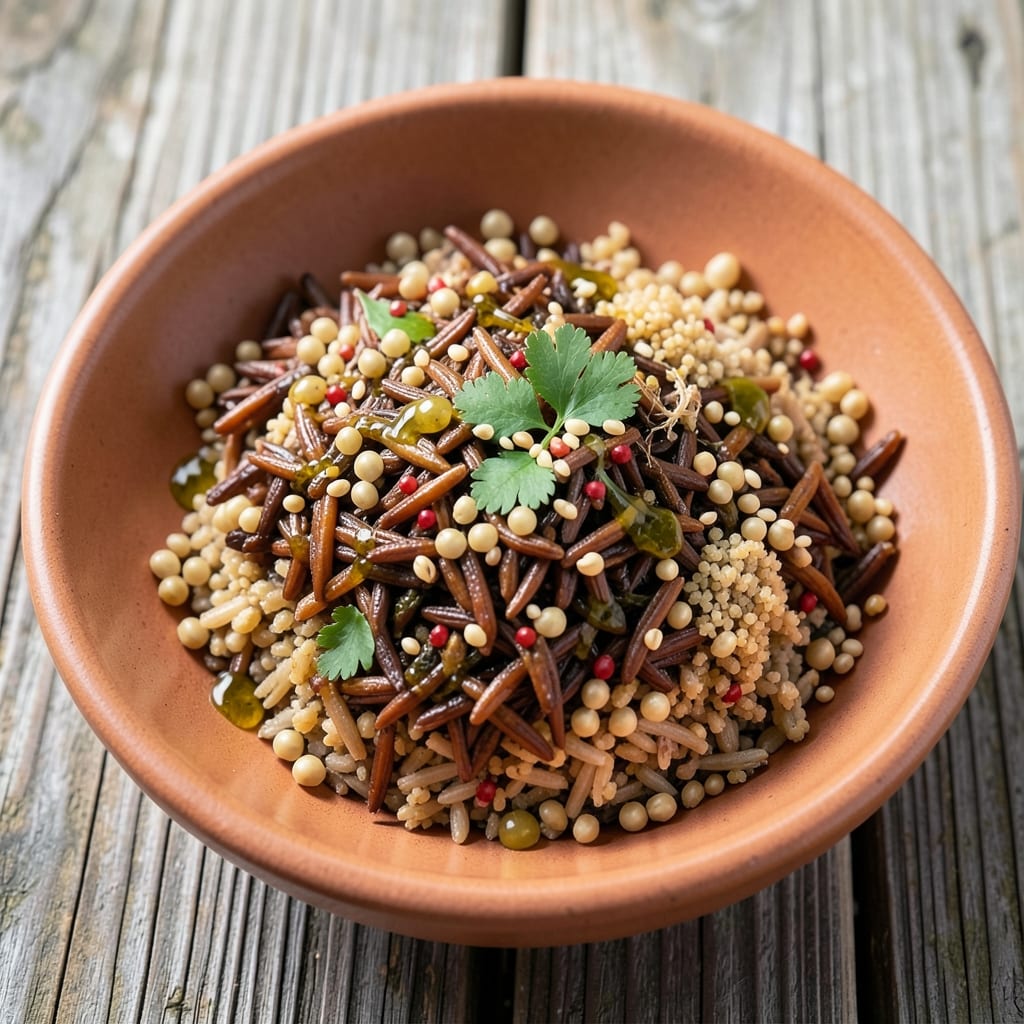
This 7-grain rice recipe transforms simple grains into a nutty, aromatic medley that elevates any meal. The combination of wild rice, brown rice, quinoa, barley, and more creates a hearty, protein-rich base perfect for bowls, salads, or sides. Each grain contributes unique texture and flavor, from chewy barley to fluffy quinoa, all simmered together in one pot for simplicity.
The secret lies in balancing soaking times and liquid ratios—too much water ruins the texture, but just the right amount yields perfectly tender grains with a satisfying bite. A simple seasoning of garlic, herbs, and vegetable broth infuses deep flavor without overpowering the natural nuttiness. This method saves time while delivering restaurant-quality results that taste homemade.
By the end, you’ll have a golden, fragrant blend of grains ready to be topped with roasted vegetables, grilled proteins, or fresh herbs. The versatility makes it ideal for meal prep or last-minute dinners—just reheat with a splash of water or broth. Every bite delivers a mix of textures and earthy flavors that keep coming back for more.
Whether served as a standalone dish or paired with your favorite proteins, this 7-grain rice is a game-changer for weeknight meals. The instructions walk you through each step, ensuring foolproof results every time. Let’s get started!
Ingredients for 7 grain rice
Seven grains, one pot, endless flavor possibilities—this medley delivers restaurant-quality texture and aroma.
| Ingredient | Amount | Notes |
|---|---|---|
| Wild Rice Blend 🌾 | ½ cup | Uncooked, long-grain preferred |
| Brown Rice 🌾 | ½ cup | Long-grain, not instant |
| Quinoa 🌾 | ½ cup | Rinsed thoroughly before cooking |
| Pearl Barley 🌾 | ¼ cup | Medium or pearl cut |
| Short-Grain Brown Rice 🌾 | ¼ cup | For chewy texture |
| Bulgur Wheat 🌾 | ¼ cup | Fine grind preferred |
| Vegetable Broth 💧 | 6 cups | Low-sodium preferred |
| Garlic Cloves 🧄 | 4 cloves | Minced for infusion |
| Fresh Thyme Leaves 🌿 | 1 tbsp | Or 1 tsp dried thyme |
| Fresh Parsley Leaves 🌿 | ¼ cup | Chopped for garnish |
| Olive Oil 🫒 | 2 tbsp | Extra-virgin for richness |
| Salt 🧂 | 1 ½ tsp | Diamond Crystal preferred |
| Black Peppercorns 🌶️ | ½ tsp | Freshly cracked |
| Bay Leaf 🌿 | 1 whole | Removed after cooking |
The grains are the stars here, so buy them fresh—especially the wild rice and barley, which can go stale quickly. Trader Joe's and Whole Foods carry excellent bulk bins where you can mix and match. For the quinoa, look for tri-color if you want extra visual appeal, but plain works too. The brown rice should be long-grain for that satisfying chew. If you're prepping ahead, store grains in airtight containers in a cool, dark place—they'll keep for 6-12 months this way. For the broth, low-sodium versions give you more control over seasoning, and homemade is ideal if you've got the time.
No wild rice? Substitute with additional brown rice or sorghum—both have a similar texture. Short on thyme? Dried oregano at half the amount works in a pinch, though fresh herbs really elevate the flavor. The olive oil matters here—extra-virgin with fruity notes adds depth that regular olive oil can't match. If you're making this ahead, cook the grains slightly underdone and finish them with extra broth later to prevent mushiness. The bay leaf is non-negotiable—it infuses that subtle herbal depth that separates this from basic rice blends. For extra protein, add white beans or lentils to the pot during the last 20 minutes of cooking.
This keeps beautifully for 5 days in the fridge, sealed in an airtight container with a splash of broth. For longer storage, freeze portions in single-serving containers—they reheat perfectly with a quick microwave or stovetop. When reheating, add a splash of water or broth to restore moisture. The flavors actually improve overnight as everything melds together. I like to portion mine into meal prep containers with compartments so I can mix and match toppings throughout the week. The grains hold up well to freezing, though barley may soften slightly—worth it for the convenience.
Why You'll Love This Recipe
- One-Pot Magic: I swear by this—just toss all five grains (wild rice, brown rice, quinoa, barley, short-grain brown) into one pot with broth, stir, and walk away. No measuring cups, no separate pans, no stress. The quinoa fluffs up perfectly while the barley adds chewy texture without extra effort.
- Nutty Earthy Crunch: That wild rice blend? It’s the star—chewy, slightly sweet, with a toasty depth. Pearl barley brings hearty bite, and the short-grain brown rice keeps everything creamy. Honestly, the flavor builds as it cooks, and by the end, it’s ridiculously satisfying.
- Meal Prep MVP: This batch lasts me five days—perfect for lunches, side dishes, or even stuffed into burritos. The grains hold up beautifully, and reheating? Just add a splash of water. I’ll be real: it’s my go-to for busy mornings when I need something substantial without fuss.
- Budget-Friendly Powerhouse: Quinoa and barley stretch this into a full meal for half the cost of pre-packaged grain mixes. Between us, I’ve made this for $1.50 per serving—more protein and fiber than most takeout. Plus, it freezes like a dream for when I’m too tired to cook.
Step-by-step instructions for 7-Grain rice medley
This nutty, flavorful blend comes together with minimal effort and maximum reward.
Toast the Grains for Depth of Flavor
Heat a large, heavy-bottomed pot over medium-high heat. Add the 2 tablespoons olive oil and swirl to coat the bottom evenly. Add all the grains—the 0.5 cup wild rice blend, 0.5 cup brown rice, 0.5 cup quinoa, 0.25 cup pearl barley, 0.25 cup short-grain brown rice, and 0.25 cup bulgur wheat—and stir constantly for 3-4 minutes.
You're looking for the grains to develop a fragrant, toasted aroma and a light golden color. This step is crucial—it enhances the nutty flavors in each grain and prevents the rice from becoming mushy. If you see any grains starting to brown too quickly, reduce the heat slightly and keep stirring until all grains are evenly toasted.
Add Aromatics and Broth for Infusion
Once the grains are toasted, add the 4 cloves minced garlic, 1 tablespoon fresh thyme leaves, 1.5 teaspoons salt, and 0.5 teaspoon freshly cracked black peppercorns. Stir for 30 seconds until the garlic becomes fragrant but doesn't brown. Pour in the 6 cups vegetable broth and add the 1 whole bay leaf. Bring the mixture to a gentle boil.
Here's the thing—using low-sodium broth gives you more control over seasoning. The grains will absorb the broth gradually, so don't rush this step. Once boiling, reduce heat to low and let it simmer uncovered for 10 minutes to allow the flavors to meld together.
Simmer Until Tender and Flavorful
After the initial simmer, cover the pot with a tight-fitting lid and reduce heat to lowest setting. Let the grains cook for 30-35 minutes, checking occasionally. You'll know they're ready when all grains are tender—wild rice should be chewy, quinoa should be fluffy, and barley should be soft but still hold its shape.
If you peek and see liquid still remaining, continue cooking for another 5-10 minutes. The grains should absorb most of the broth but still have a slight moisture. If it looks dry, add 1-2 tablespoons water to prevent burning. The grains should be al dente, not mushy.
Rest and Garnish for Perfect Texture
Once the grains are tender, remove the pot from heat and let it sit covered for 10 minutes. This resting period allows the grains to finish absorbing any remaining liquid and develop their full texture. Remove and discard the bay leaf—it's served its purpose.
Fluff the grains gently with a fork, then stir in the 0.25 cup chopped fresh parsley leaves. The parsley adds a bright finish that cuts through the richness of the grains. Serve immediately while still warm, or let it cool slightly for a room-temperature side dish. The flavors will only deepen as it sits.
Pro Tips For Making 7 Grain Rice
- Rinse the Wild Rice: I learned this the hard way—skipping the rinse leaves your wild rice blend gummy and clumpy. Give it a solid 30-second swirl under cold water, then drain. That extra step cuts down on bitterness and keeps the texture light, especially since wild rice absorbs way more liquid than the others. ---
- Toast the Barley First: Pearl barley’s the odd one out here—it needs a quick head start. Dry-toast it in the pot for 2-3 minutes over medium heat before adding broth. Sounds weird, but it works: you’ll end up with a nuttier flavor and fewer stray hard grains lurking in your finished dish. ---
- Don’t Drown the Quinoa: Quinoa’s the diva of this mix—it cooks faster than brown rice but slower than barley. Use the 1:1.5 liquid ratio for the whole batch, but check the quinoa at 15 minutes. If it’s still firm, add a splash of hot broth later instead of overloading the pot from the start. ---
- Strain the Broth: Store-bought broth is salty and often cloudy, which muddies the colors and flavors of your grains. Strain it through a fine-mesh sieve before pouring—it’s a 30-second upgrade that makes the final dish look (and taste) restaurant-worthy. Yes, even if you’re impatient like me.
Creative variations of this recipe
Mediterranean Twist
Swap the vegetable broth for 4 cups chicken broth and add 1 teaspoon ground cumin and ½ teaspoon smoked paprika during the toasting step. Top with diced cucumbers, cherry tomatoes, and crumbled feta for a vibrant bowl. The cumin adds warmth, while the feta brings tangy brightness—perfect for summer meals. 🌿
Protein-Packed Fusion
Cook ½ cup black beans or ½ cup chickpeas with the grains for the last 20 minutes of simmering. Stir in 1 teaspoon smoked paprika and ½ teaspoon garlic powder for depth. This turns your medley into a hearty, plant-based main dish with 15g protein per serving. Serve with avocado slices and lime wedges for extra freshness. 💪
Asian-Inspired Sesame Crunch
After cooking, toss the grains with 1 tablespoon toasted sesame oil, 1 teaspoon soy sauce, and ½ teaspoon grated ginger. Top with crushed peanuts and sliced green onions for texture. The sesame oil adds nutty richness, while the peanuts give a satisfying crunch—ideal for stir-fry bowls or rice dishes. 🥜
Sweet & Savory Breakfast Bowl
Cook the grains slightly underdone, then finish with 1 tablespoon maple syrup, ½ teaspoon cinnamon, and ¼ cup raisins or dried cranberries. Top with Greek yogurt and chopped walnuts for a hearty breakfast. The sweetness balances the nuttiness, making it a perfect cold-weather morning dish. 🍯
Herb-Infused Garden Medley
Add 1 teaspoon dried rosemary and ½ teaspoon dried sage during the toasting step. Finish with chopped fresh dill and a drizzle of lemon-tahini dressing (mix 2 tablespoons tahini with 1 tablespoon lemon juice and 1 tablespoon water). This herby version pairs beautifully with grilled fish or roasted vegetables. 🌱
Spicy Cajun Kick
Toast the grains with ½ teaspoon Cajun seasoning (or ¼ teaspoon cayenne pepper and ¼ teaspoon smoked paprika). Finish with chopped green onions and a squeeze of hot sauce. The heat cuts through the nuttiness, making it a bold side for BBQ or spicy proteins. Trust me, it’s a game-changer for flavor lovers. 🌶️
Nutrition facts
Frequently asked questions
Can I use instant rice in this 7-grain blend?
No, instant rice won't work here—the grains need their individual cooking times to develop proper texture. The blend relies on the chewy barley, fluffy quinoa, and nutty wild rice, which are ruined by quick-cooking rice. For a faster version, try pre-cooking the grains separately and mixing them with freshly toasted bulgur wheat.
How do I adjust this for a rice cooker?
Use the same ratio of grains to broth (1:6), but toast the grains in a separate pan first. Add everything to the rice cooker, then cook on the white rice setting. The cooker will handle the simmering automatically—just check for doneness 5 minutes before the estimated time ends. Stir in parsley at the end as usual.
Why does my barley turn mushy?
Overcooking or insufficient liquid causes mushy barley. Use the full 6 cups broth and simmer uncovered for 10 minutes before covering. Barley needs gentle heat to maintain its shape—if it looks dry, add 1-2 tbsp water during cooking rather than extra broth. Always remove from heat when grains are still slightly firm.
Can I make this gluten-free?
Yes, but replace the bulgur wheat with ½ cup additional quinoa or ½ cup millet. Check all other grains for gluten certification (especially wild rice blends). The flavor profile will be slightly lighter without bulgur, but the texture remains satisfying. Use certified gluten-free broth to be safe.
How much should I make for a crowd?
Double the recipe for 12 servings—it's perfect for potlucks or meal prep. Use a large stockpot (8-10 quart capacity) to prevent overflow. For gatherings, serve in individual bowls with toppings like roasted veggies or proteins. The flavors intensify when reheated, so it's ideal for keeping warm in a chafing dish.